
INGREDIENT GUIDE • JINA MOON
By Jina Moon • Updated August 19, 2026 • Tested in my kitchen • 14 min read
Affiliate disclosure: As an Amazon Associate I earn from qualifying purchases. This post contains affiliate search links; if you buy through them, I may earn a small commission at no extra cost to you.
Quick answer: For most Korean recipes, use cheongju (청주) when you want a dry, clean rice-wine flavor, and use mirim or matsul (미림/맛술) when the dish also needs sweetness and shine. Regular green-bottle soju can help in boiled meat or strong marinades, but it lacks the sweetness and rice aroma of mirim. Makgeolli is cloudy, tangy, and better for batters, doughs, and selected marinades—not as an all-purpose cooking wine.
If you can buy only one bottle, choose Korean Mirim/matsul for sweet marinades or cheongju for savory cooking. Always read the label because sugar, salt, and alcohol content vary by product.
A Korean recipe says “rice wine,” “cooking wine,” cheongju, mirim, or matsul. Your local Asian market has five similar-looking bottles, while your supermarket has sake, mirin, sherry, and white wine. Are they interchangeable?
Sometimes—but not automatically.
I have cooked with cheongju, Korean Mirim, soju, and makgeolli. The most useful way to choose is not simply “Korean versus Japanese.” Look at three things: Is it dry or sweet? Is it clear or cloudy? How strong is it? Those differences decide whether your bulgogi tastes balanced, your fish braise stays clean, or your soup becomes unexpectedly sweet.
Cheongju vs Mirim vs Soju vs Makgeolli: Quick Comparison
| Ingredient | What it is | Typical taste | Best cooking use | Good 1:1 substitute? |
|---|---|---|---|---|
| Cheongju (청주) | Clear, fermented rice alcohol; products sold as yakju may fill a similar culinary role | Dry to gently sweet, clean, lightly fermented | Fish, meat, broth, braises, savory marinades | Dry sake or dry sherry |
| Mirim / matsul (미림 / 맛술) | Seasoning wine made for cooking; recipes and labels vary | Noticeably sweet, mild, sometimes slightly savory | Bulgogi, galbi, glazed braises, stir-fries, sauces | Japanese mirin, after checking sweetness |
| Green-bottle soju (소주) | Diluted Korean spirit, usually clear and relatively neutral | Clean, lightly sweet or neutral, more alcoholic | Boiled pork, strong meat or seafood dishes, a few marinades | Not for mirim unless sugar is added |
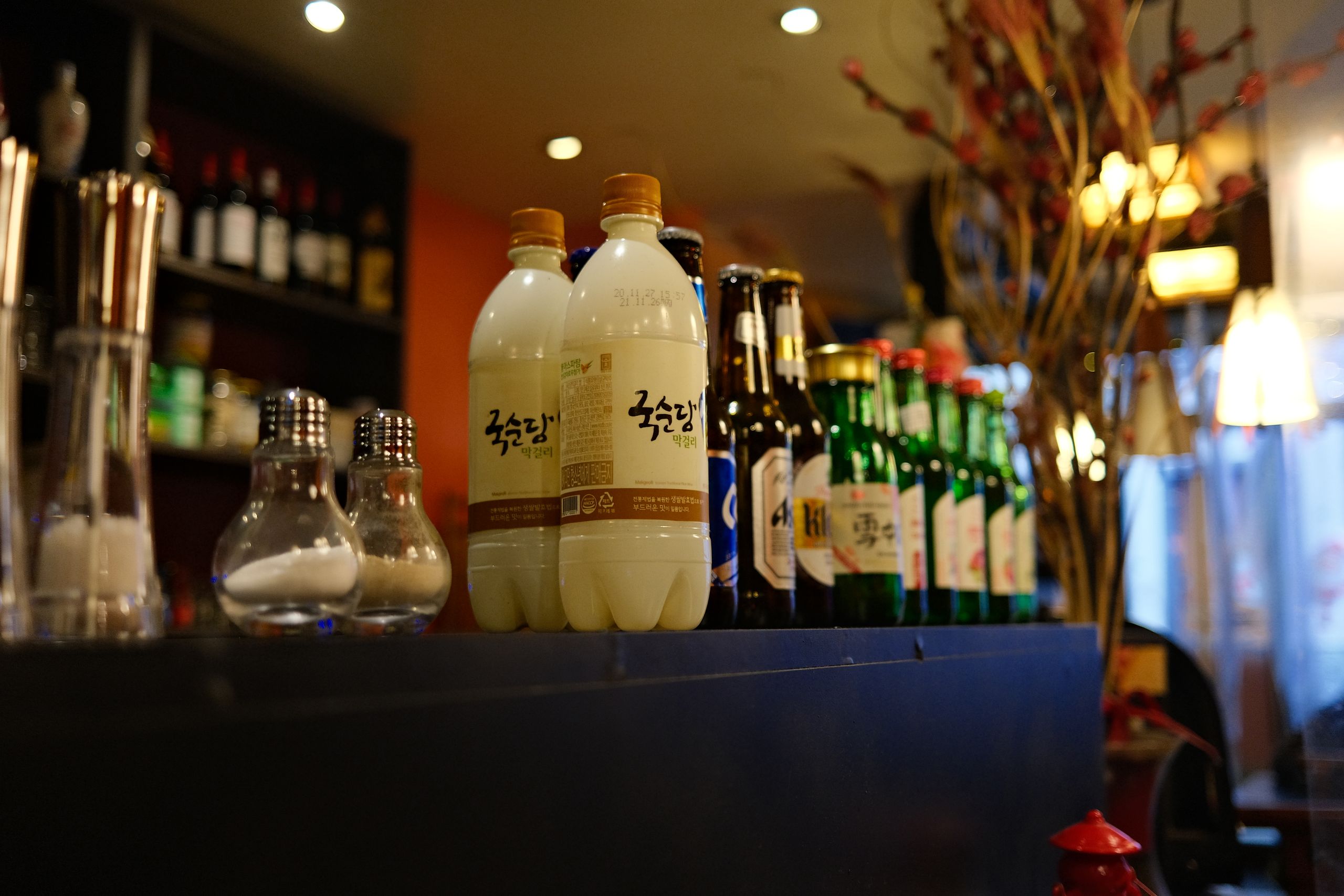
| Makgeolli (막걸리) | Cloudy, fermented grain drink with sediment | Tangy, creamy, earthy, sometimes sweet and fizzy | Jeon batter, dough, selected marinades and modern sauces | No; it changes color, texture, and acidity |
| Japanese mirin | Sweet Japanese rice seasoning; hon-mirin and mirin-style products differ | Sweet, rounded, glossy | Glazes, sauces, marinades | Usually for Korean mirim/matsul, not dry cheongju |
Important: These alcohol ranges and flavor profiles are not fixed standards for every bottle. A sweetened cooking seasoning and a dry drinking wine can sit beside each other under similar English names. The back label is more reliable than the large words on the front.
What Does Alcohol Actually Do in Korean Cooking?
Korean home cooks commonly add a small amount of alcohol to meat, fish, braises, and marinades. It can perform several jobs:
- Softens strong aromas: As alcohol evaporates, it can carry some volatile aromas with it. This helps a meat or fish dish smell cleaner, although it cannot rescue spoiled ingredients.
- Carries flavor: Alcohol dissolves some aroma compounds that water or fat alone may not capture, helping garlic, ginger, scallion, sesame oil, and spices smell more complete.
- Adds fermented depth: Rice-based brews contribute subtle acidity, grain aroma, and umami-like complexity.
- Balances a marinade: Mirim and many matsul products bring sweetness as well as alcohol. That sweetness can round out soy sauce and help a cooked glaze look shiny.
- Changes texture: Alcohol itself is not a magic tenderizer. The full marinade—including fruit, acid, sugar, salt, and time—matters more. Products containing sugar or other seasonings may affect browning and texture differently from plain alcohol.
You usually need only 1 to 2 tablespoons for a family-size marinade or braise. More is not automatically better. Too much strong alcohol can leave a sharp smell, while too much mirim can make a savory Korean dish taste syrupy.
Does all the alcohol cook off?
No. Heat reduces alcohol, but it does not make it disappear immediately. A published review of alcohol retention in cooking reported that the amount left varies greatly with cooking time, method, pan size, and surface area. Briefly heated and uncooked marinades retain more than long-simmered dishes. See the Journal of the American Dietetic Association summary.
If you avoid alcohol for health, religious, pregnancy, recovery, or personal reasons, use an alcohol-free substitute rather than assuming a quick stir-fry removes everything.
Cheongju (청주): The Best Dry Korean Cooking Alcohol
Cheongju literally means “clear alcohol.” In culinary use, it is a clear fermented rice drink without the cloudy solids found in makgeolli. Traditional Korean clear rice brews are also commonly discussed under the name yakju (약주), while modern legal and commercial labels can make the terminology more complicated than a home cook needs.
For shopping, focus on the practical clues: a clear rice-based drink, moderate alcohol, and little or no added sweetness.
What cheongju tastes like
Cheongju is cleaner and drier than mirim. It can have delicate rice, grain, floral, fruit, or fermentation notes, depending on how it was brewed. It seasons without turning a savory dish into a sweet glaze.
Use cheongju for:
- Fish and seafood marinades
- Godeungeo jorim and other savory fish braises
- Beef, pork, or chicken marinades when the recipe already contains enough sugar
- Clear broths and soups where you do not want cloudiness
- Steamed dishes and dumpling fillings
- Removing the heavy aroma from meat before stir-frying or boiling
My practical rule: If the recipe is savory and already includes pear, apple, sugar, corn syrup, or oligosaccharide syrup, start with cheongju rather than mirim.
Is cheongju the same as sake?
No, but they are close enough for most cooking. Both are clear fermented rice drinks. Traditional Korean brews often use nuruk, a mixed-culture fermentation starter, while Japanese sake uses rice koji with yeast. Production methods and flavor profiles differ, but dry sake is the easiest overseas substitute for dry cheongju at a 1:1 ratio.
Avoid very fragrant, expensive sipping sake for a strongly seasoned marinade. A basic dry bottle is enough. Check “cooking sake” for added salt before adding your normal amount of soy sauce.
Mirim (미림) and Matsul (맛술): The Sweet Cooking-Wine Option
Korean mirim cooking rice wine sauce · 900 ml (Amazon) → · Lotte mirim cooking wine · 1.8 L (Instacart) →
Matsul literally means “flavor alcohol” and is the broad Korean term for alcohol intended for cooking. Mirim is a familiar Korean cooking-wine name that many recipe writers use loosely in the way English recipes say “cooking wine.” Imported bottles may also be labeled “mirin,” “rice cooking wine,” or “Korean cooking wine.”
The key fact is simple: mirim and many matsul products are sweeter than dry cheongju. Some contain added sugars, syrups, acids, salt, or flavoring ingredients. Formulas can differ by brand and export market.
Mirim vs Japanese mirin
They fill a similar role, but the words do not guarantee an identical formula.
- Japanese hon-mirin: A traditional sweet rice seasoning containing alcohol, generally made from glutinous rice, rice koji, and alcohol or shochu.
- Mirin-style seasoning: May contain little alcohol or use sweeteners, salt, and flavorings to imitate mirin.
- Korean Mirim/matsul: Often contains alcohol and noticeable sweetness; some popular products are around 14% ABV, so “cooking wine” does not always mean low alcohol.
Do not choose by the front label alone. Check the ingredient list for sugar, corn syrup, salt, and alcohol percentage. My guide to reading Korean food labels explains the Korean words to look for.
Use mirim or sweet matsul for:
- Bulgogi and galbi marinades that need sweetness
- Chicken or pork stir-fries with soy-based sauce
- Sweet-salty braises such as jangjorim
- Glazes where shine and caramelization are desirable
- Sauces in which you want sweetness without adding only plain sugar
Adjustment rule: For every tablespoon of sweet mirim added in place of dry cheongju, begin by reducing the recipe’s sugar or syrup by about 1/2 teaspoon. Taste the finished sauce before adding more sweetener.
Korean mirim cooking rice wine sauce · 900 ml (Amazon) → · Eden Foods mirin rice cooking wine · 10.1 fl oz (iHerb 5% off) → · Kikkoman Manjo Aji-Mirin sweet rice wine · 10 fl oz (Target) →
Can You Cook With Soju?
Yes, but soju is a situational substitute—not the Korean answer to every cooking-wine question.
The inexpensive green-bottle soju found in restaurants is usually a diluted spirit with a clean, fairly neutral profile. It supplies alcohol but contributes less rice aroma and fermented complexity than cheongju. It also lacks the sugar of mirim.
Soju works best in:
- Water used to boil pork for bossam or suyuk
- Strongly flavored meat marinades with garlic, ginger, pepper, and soy sauce
- Some seafood preparations where a small amount of neutral alcohol is useful
- Emergency substitutions when cheongju or sake is unavailable
When soju is a poor substitute
- For mirim: Soju is not sweet enough. Add a measured amount of sugar if the sweetness is important.
- For delicate broth: Too much can smell sharp, especially if cooking time is short.
- For high-proof traditional soju: Premium distilled soju may be 25%, 40%, or stronger and can have valuable grain character. Do not swap it tablespoon-for-tablespoon without considering the proof—and it is usually better enjoyed as a drink.
Emergency formula: To replace 1 tablespoon of regular mirim, use 1 tablespoon regular green-bottle soju plus 1/2 teaspoon sugar. To replace dry cheongju, regular soju can be used 1:1 in a strongly seasoned cooked dish, but dry sake will taste closer.
Can You Use Makgeolli for Cooking?
Yes—but makgeolli is not a clear cooking wine. It contains suspended grain solids and has a tangy, sometimes sweet, lightly carbonated flavor. Those qualities can be useful when you want them and distracting when you do not.
Where makgeolli works
- Jeon and savory pancake batter: A fizzy makgeolli can add liquid, gentle tang, and lightness. Replace only part of the water first so the batter does not become too sweet.
- Bread and modern baking: Its grain flavor and fermentation character can complement doughs and steamed breads, although results depend on whether the makgeolli is pasteurized and how sweet it is.
- Selected pork or chicken marinades: Use it when a creamy grain note and slight acidity fit the dish.
- Modern sauces: Chefs use reduced makgeolli in creamy or tangy sauces, but this is a deliberate flavor choice—not a neutral swap.
Where makgeolli does not work
Do not use it as a direct replacement for cheongju in a clear soup, a delicate fish dish, or any recipe where cloudiness and tang would be unwanted. It can also contain more sugar than you expect.
Keep makgeolli refrigerated when the label requires it. Before using a settled bottle, mix it gently. With live, carbonated makgeolli, open slowly over a sink because pressure can build inside the bottle.
Exact Korean Cooking Wine Substitute Ratios
These are starting ratios for 1 tablespoon of the ingredient named in a recipe. Brand sweetness and salt vary, so taste the sauce before cooking a full batch.
| If the recipe calls for | Best substitute | Exact starting ratio | Adjustment |
|---|---|---|---|
| 1 tbsp cheongju | Dry Japanese sake | 1 tbsp | Check cooking sake for salt |
| 1 tbsp cheongju | Pale dry sherry | 1 tbsp | Slightly nuttier but reliable |
| 1 tbsp cheongju | Dry white wine | 1 tbsp | Use a neutral, unoaked wine; expect more fruit/acidity |
| 1 tbsp mirim/matsul | Japanese mirin | 1 tbsp | Reduce other sugar if the bottle is very sweet |
| 1 tbsp mirim/matsul | Cheongju or dry sake + sugar | 1 tbsp + 1/2 tsp sugar | Dissolve before adding |
| 1 tbsp mirim/matsul | Pale dry sherry + sugar | 1 tbsp + 1/2 tsp sugar | Good in marinades and braises |
| 1 tbsp regular soju | Vodka diluted with water | 1 tsp 40% vodka + 2 tsp water | Use only in a cooked, strongly seasoned dish |
| 1 tbsp cooking alcohol | Alcohol-free savory option | 1 tbsp unsalted stock or water | Add extra ginger/scallion for meat or fish aroma |
| 1 tbsp sweet mirim | Alcohol-free sweet option | 2 tsp water + 1 tsp white grape or apple juice | Use unsweetened juice if possible |
Never substitute rice vinegar 1:1 for rice wine. Rice vinegar is acidic; rice wine is alcoholic and much less sour. A tablespoon of vinegar can dominate a marinade that needed only mild fermented depth.
Which Korean Alcohol Should You Use for Each Dish?
| Korean dish or technique | Best choice | Why |
|---|---|---|
| Bulgogi | Mirim/matsul or cheongju | Use mirim for extra sweetness; use cheongju if pear and sugar are already generous |
| Galbi marinade | Mirim/matsul | Sweetness and shine suit a grilled soy glaze |
| Spicy pork or chicken | Cheongju, mirim, or a little soju | Strong seasoning can handle a neutral spirit; choose mirim only if sweetness is wanted |
| Fish jorim | Cheongju | Keeps the flavor savory and clean without unnecessary sugar |
| Bossam/suyuk boiling liquid | Soju or cheongju | Both fit a strongly aromatic pot with ginger, onion, garlic, or doenjang |
| Clear soup or broth | Cheongju | No cloudy sediment and less sweetness |
| Jeon batter | Makgeolli, optionally | Adds a fermented grain note and possible carbonation; replace only part of the water |
| Glossy soy braise | Mirim/matsul | Sweetness supports caramelization and a shiny finish |
You do not need alcohol in every Korean recipe. Many excellent bulgogi, galbi, stew, and stir-fry recipes work without it. If the amount is only 1 tablespoon in a large batch, omitting it is often better than adding a bad substitute.
Where to Buy Korean Cooking Wine Outside Korea
In the United States, start with H Mart, other Korean supermarkets, large Asian grocers, or online Korean grocery stores. Cheongju sold as drinking alcohol may be in a separate licensed section, while matsul may sit with soy sauce and vinegar. Placement and shipping rules vary by state.
In the UK and EU, look in Korean supermarkets and Asian food shops, but remember that alcohol tax and shipping restrictions can limit online availability. A Japanese grocery store is often the easiest place to find dry sake or mirin substitutes.
