
TESTED IN MY KITCHEN • JINA MOON
By Jina Moon • Updated September 9, 2026 • Tested in my kitchen in Washington • 6 min read
As an Amazon Associate I earn from qualifying purchases. I bought every product below with my own money.
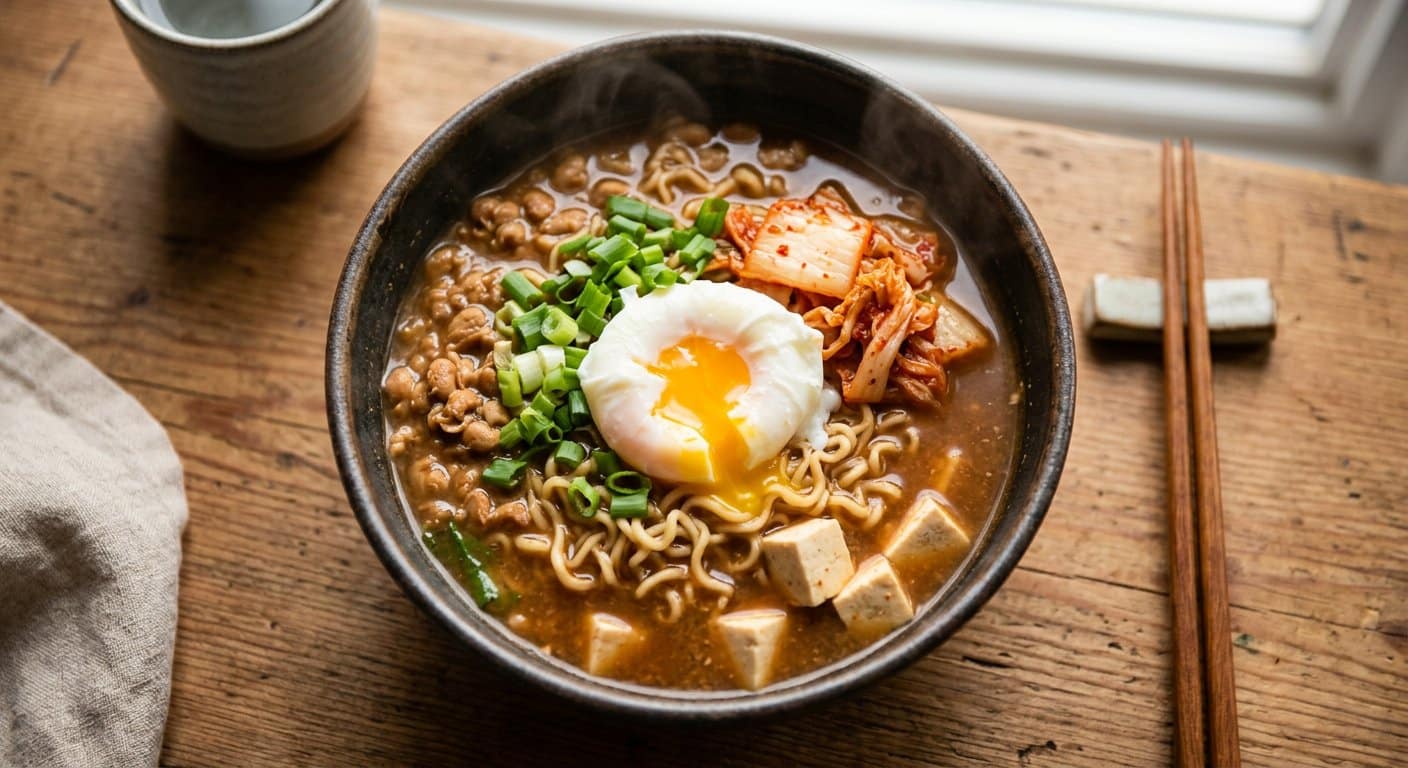
What it is: Doenjang ramen is a 15-minute Korean home-style noodle soup — instant ramen cooked in a savory broth of doenjang (Korean fermented soybean paste), scallions, and kimchi. It’s the “I’m tired, but I want something that tastes like effort” dinner.
You need: 1 pack of instant ramen, 1 tbsp doenjang, scallions — plus optional kimchi, tofu, and an egg.
No doenjang? Use 1 tbsp red miso + ½ tsp soy sauce — the exact swap from my Doenjang Substitute guide.
It’s 9 pm on a rainy Thursday in Washington. The fridge has a half-finished block of doenjang, a pack of instant ramen, some scallions, and one egg. In most kitchens that’s a “takeout night.” In mine, that’s dinner.
Doenjang ramen is one of those Korean home dishes you’ll almost never see on a restaurant menu — not because it’s complicated, but because it’s too easy. It’s the dish I’ve made more times than any other since moving away from Seoul: one pot, fifteen minutes, and a broth that somehow tastes like it’s been simmering for hours. It hasn’t.
Why Doenjang Makes Ramen Taste “Finished”
Instant ramen on its own is salty, but it’s flat — one note, repeated. Doenjang fixes that by doing three jobs at once (the full breakdown is in my doenjang guide):
- Deep savory funk from a year+ of fermentation — the umami layer store-bought broth powders can’t fake.
- Salt structure — it seasons the whole pot, so the flavor has a backbone instead of just sweetness.
- Texture — the soft crushed soybean bits floating in the broth are half the experience.
Add the ramen’s own seasoning packet on top of that and you get a broth that’s savory, a little sweet, and faintly spicy. That’s the target.
Shopping List — Buy This First
Everything below is on Amazon in the US (and the UK). Total for a first bowl: about $9–$12, and the doenjang lasts a year, so it’s less after that.
| Item | What to buy | Link / swap |
|---|---|---|
| Doenjang (1 tbsp per bowl) | Sempio Doenjang (460g) or CJ Haechandle (500g) — around $7, keeps over a year in the fridge | Sempio on Amazon → · No doenjang? the 30-second miso swap → |
| Instant ramen | Any — Korean brands (Samyang, Ottogi) if you can find them. The seasoning packet is an asset here, not a cheat. | — |
| Scallions (green onions) | 2, cut into 1-cm pieces. Save the dark greens for the finish. | — |
| Kimchi (optional) | 2–3 slices, cut into strips. This is where the acidity comes from — I don’t skip it when I have it. | My ranked store-bought picks → |
| Egg (optional) | 1, cracked in and poached soft on top. | — |
| Tofu (optional) | Half a block, cubed. Soft tofu is perfect for this. | — |
| Sesame oil | A few drops at the end. If you already cook Korean food, you have it. If not, skip it without guilt. | — |
No Doenjang? The 30-Second Swap
Don’t wait for the shipping — make the swap I use whenever the jar runs out:
1 tbsp Japanese red (or awase) miso + ½ tsp soy sauce + a tiny pinch of gochugaru, whisked into the broth in step 2.
It gets you about 90% of the way. The full reasoning, all five swaps I tested, and what to avoid (looking at you, hoisin) is in the Doenjang Substitute guide →
How to Make Doenjang Ramen
One pot. Fifteen minutes. Feeds one (two if you add a second pack and don’t tell me).
- Boil the water. Bring 2 cups (480 ml) of water to a boil in a small pot.
- Dissolve the doenjang. Turn the heat to medium, add 1 tbsp doenjang (or the miso swap) and whisk until it’s fully dissolved. Doing this before the noodles is the whole trick — no paste clumps at the bottom of your bowl.
- Add the seasoning. Toss in the ramen’s seasoning packet (or half of it, if it’s a strong one). It adds the sweet-spicy layer that doenjang alone doesn’t have.
- Simmer the aromatics. Add the white parts of the scallions, kimchi, and tofu. Simmer 2 minutes so the kimchi gives the broth its sour edge.
- Cook the noodles. Add the ramen block, breaking it gently. Cook 3–4 minutes, per the package.
- Crack in the egg. Poach it right in the broth for about 2 minutes — soft yolk, not a scramble (though scrambled is a style too).
- Finish. Dark scallion greens, a few drops of sesame oil, and — if you like heat — a pinch of gochugaru stirred in at the end.
- Taste before you eat. Too mild? A few more drops of soy sauce. Too sweet? A little more kimchi broth. Doenjang ramen is the one Korean dish I’m not precious about seasoning to taste.
Make It Yours
- Spicy version: swap the seasoning packet for 1 tsp gochugaru + 1 tsp soy sauce, and add a spoon of gochujang at the end.
- Leftover meat: cooked pork, bulgogi, or even Spam — whatever the fridge is holding. Stir it in at step 4.
- Vegetable-loaded: mushrooms, spinach, or any leftover veg, in at step 4. It’s a soup — it wants company.
- Double noodles, single broth: the only rule is that the broth ratio (1 tbsp doenjang per 2 cups water) doesn’t change. Add water, add doenjang, keep the ratio.
Frequently Asked Questions
Is doenjang ramen a “real” Korean dish?
It’s home-style, not restaurant-style — the kind of thing made in Korean households, dorms, and office kitchens, especially by people too tired to cook properly. You won’t find it on a jjimjilbang menu. You will find it in a million homes.
How much doenjang do I use per bowl?
1 tablespoon per 2 cups of water is my baseline. It’s a range, not a law — taste at step 8 and adjust. Doenjang keeps getting stronger as it ages in your fridge, so an old jar might want a slightly lighter hand.
Should I really use the instant ramen seasoning packet?
Yes. I know it feels like cheating in a “real Korean dish.” It isn’t — it’s the sweet-salty layer that rounds out the doenjang’s earthiness. Half the packet if it’s a very strong flavor.
Does it keep?
One day in the fridge, but noodles get mushy, so I eat it the night I make it. If you make a double batch, cook the noodles separately and mix them in when you reheat.
Bottom Line
- The dish: instant ramen in a doenjang broth with scallions, kimchi, and a soft egg — 15 minutes, one pot.
- The ratio that matters: 1 tbsp doenjang (or the miso swap) per 2 cups of water.
- The investment: one $7 jar of doenjang that turns every boring noodle night into a proper Korean one — for the next year.
Next Reads:
- Doenjang Substitute: 5 Alternatives I Tested (Miso, Ssamjang & More) — the full swap guide
- Best Store-Bought Kimchi on Amazon, Ranked (2026 Taste Test)
- Where to Buy Korean Ingredients Online (with label photos)
- Korean Food Glossary: 45 Essential Terms Explained
Disclosure: This post contains affiliate links. If you buy through my links I may earn a small commission at no extra cost to you. I only recommend products I’ve bought with my own money. As an Amazon Associate I earn from qualifying purchases. Questions? Contact Jina →
Written by Jina Moon • Seoul-born, cooking Korean food 5–6 days a week in Washington. Photos from my kitchen.
🛒 Stock Your Korean Pantry
- Gochujang (Korean chili paste) — the backbone of Korean cooking → View on Amazon
- Ssamjang (dipping paste) — the BBQ wrap essential → View on Amazon
