
TESTED IN MY KITCHEN • JINA MOON
As an Amazon Associate I earn from qualifying purchases. I bought every product below with my own money.
Quick answer: The best doenjang substitute is 1 tbsp Japanese red/awase miso per 1 tbsp doenjang, with regular soy sauce added only after tasting. It gives an approximate fermented soybean base, not identical flavor or sodium. Up to about 1/2 tsp regular soy sauce per tablespoon is an optional adjustment, not a required addition.
Avoid: Plain sweet white miso without soy sauce or hoisin sauce — they are far too sweet and mild for Korean stews.
If you cook Korean food regularly, get real Sempio or CJ Haechandle Doenjang — check the current pack size and price, and follow the package’s storage and use-by instructions.
There is nothing quite like a bubbling earthenware pot of authentic doenjang jjigae on a rainy day. But when I first moved to Washington and lived miles away from H Mart, I frequently ran out of doenjang (Korean fermented soybean paste). Because Korean recipes rely heavily on its pungent, earthy umami, substituting it incorrectly can make a stew taste flat, sweet, or soapy.
In this guide, I’ll share the 5 doenjang substitutes I tested in my kitchen, how each one performs in soups and marinades, and how to buy genuine Korean doenjang online without paying tourist markup prices.
Doenjang Substitute Calculator
Choose what you have and the amount of doenjang in your recipe. Get a starting amount, not an exact flavor or sodium match. This tool scales the guide’s volume ratios; it has not been separately kitchen-tested at every quantity.
Quick reference: start with the same volume of red/awase miso, or white miso in an emergency. Taste the mixed dish before adding any soy sauce. For BBQ dipping, ready-seasoned ssamjang can replace the finished dip. These swaps do not recreate doenjang exactly. If controls do not appear, use the ratio table below.
Label check: Miso, ssamjang and soy sauce can contain soy, wheat or other allergens. Read the exact package. This calculator does not determine whether a product is gluten-free or vegan. Taste marinades before they touch raw meat, never afterward.
Prefer the original flavor? See the doenjang buying guide below →
What Doenjang Actually Does (So You Know What to Replace)
Doenjang is Korean fermented soybean paste made from whole soybeans (meju) fermented in brine. It serves three distinct roles in Korean cooking:
- Earthy Umami & Funk: Deep, aged savory flavor from wild fermentation (more intense than Japanese miso).
- Salt Structure: High salt content that seasons an entire pot of broth without needing extra table salt.
- Chunky Texture: Contains soft, crushed soybean pieces that give traditional stews their signature rustic body.
A successful substitute needs to match both the aged bean flavor and the salinity. Sweet sauces or mild broths simply won’t stand up in Korean recipes.
Doenjang vs Miso vs Ssamjang: The 30-Second Comparison
Most people who search for a substitute are really asking one question: how close is miso?
| Paste | What it is | Swap ratio for 1 tbsp doenjang | Works best in |
|---|---|---|---|
| Doenjang (된장) | Korean soybean paste, fermented for months in earthenware pots | — (the real thing) | Jjigae, ssamjang, marinades |
| Japanese red / awase miso | Koji-fermented, smoother and milder | 1 tbsp; taste before adding soy sauce (up to about 1/2 tsp if needed) | Stews, soup bases, marinades — the closest everyday swap |
| Ssamjang | Real doenjang blended with gochujang, garlic and sesame | 1 tbsp (1:1) | BBQ dipping and wraps — too sweet for jjigae |
| White (shiro) miso | Short-fermented, sweet, delicate | 1 tbsp; cut added sugar and taste before adding soy sauce | Emergencies only — it goes flat in Korean stews |
| Gochujang | Chili paste with rice syrup — sweet and spicy | 1/2 to 3/4 tbsp + a splash of soy sauce | Marinades and glazes only — never a 1:1 stew base |
If you want the science behind the difference — fermentation time, salt, texture — I wrote a separate breakdown in Is doenjang the same as miso?
Quick Pick by Dish
- Doenjang jjigae (soybean paste stew): Red/Awase miso + soy sauce (Swap #1), or wait for real doenjang
- Ssamjang / BBQ dipping sauce: Ssamjang directly (Swap #2)
- Vegetable or tofu soup base: Chinese yellow soybean paste (huangjiang)
- Quick emergency fix: White miso + soy sauce, but reduce added sugar elsewhere
5 Doenjang Substitutes I Tested — Ranked
I tested each substitute by making a simple vegetable soybean paste soup and tasting it alongside my American husband. Here is how they scored on a 1–5 scale:
| Swap (per 1 tbsp Doenjang) | Taste | Texture | Verdict |
|---|---|---|---|
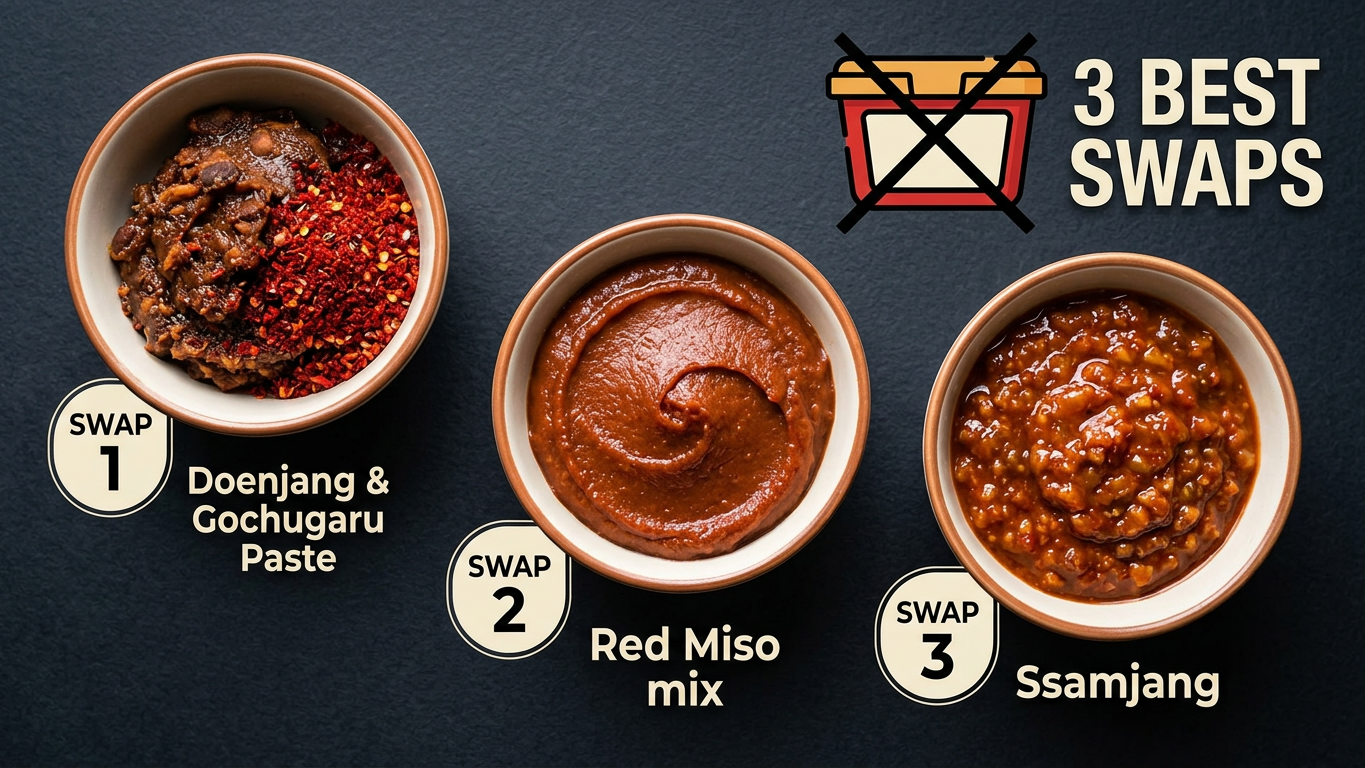
| 1. Japanese Red/Awase Miso + Soy Sauce 1 tbsp red miso; taste before adding soy sauce (up to about 1/2 tsp if needed); optional pinch of gochugaru | ★★★★☆ 4.5 | ★★★☆☆ 3.5 | Best Overall Swap. Red miso has deeper fermentation than white miso. The soy sauce adds the missing salty funk. |
| 2. Ssamjang (Korean Seasoned Bean Paste) Use 1:1 ratio | ★★★★☆ 4.0 | ★★★★☆ 4.0 | Best for Marinades & Ssam. Contains real doenjang mixed with garlic and gochujang. Great for dipping, slightly sweet for jjigae. |
| 3. Chinese Yellow Soybean Paste (Huangjiang) Use 1:1 ratio | ★★★☆☆ 3.5 | ★★★★☆ 4.0 | Good rustic soybean texture. Has a slightly different yeast profile, but works reliably in stews and braises. |
| 4. Japanese White Miso (Shiro Miso) + Soy Sauce 1 tbsp white miso; taste first, with up to about 1 tsp soy sauce only if needed | ★★★☆☆ 3.0 | ★★★☆☆ 3.0 | Acceptable in an emergency, but white miso is much sweeter and milder. Reduce any added sugar in your recipe. |
| 5. Hoisin Sauce or Thai Curry Paste | ★☆☆☆☆ 1.0 | ★☆☆☆☆ 1.0 | Avoid completely. Hoisin turns stew into sweet syrup; curry paste introduces spices and aromatics that clash with Korean dishes. |
| Also worth trying (verified across other recipe sources, not yet personally tested for this article): | |||
| Vegetable or Chicken Bouillon + White Miso | ★★★☆☆ 3.5 | ★★★☆☆ 3 | A pantry-stretch combo that adds savory depth when you’re out of both doenjang and good miso. Bouillon supplies salt and umami; miso adds the fermented bean note. Not yet personally tested for this article. |
| Korean Guk-ganjang (Soup Soy Sauce) | ★★★☆☆ 3 | ★★☆☆☆ 2 | Made from the same fermentation process as doenjang, so the flavor family is close, but it’s thin — not a paste. Best used to boost saltiness alongside another swap, not alone. Not yet personally tested for this article. |
Jina’s Rule: If you are making Doenjang Jjigae (Soybean Paste Stew), use Swap #1 (Red Miso + Soy Sauce) or wait until you have real doenjang. If you are making a Korean BBQ meat marinade or dipping sauce, Swap #2 (Ssamjang) works like a charm.
How to Use Swap #1 (Starting Ratio)
To replace 1 tablespoon of doenjang: start with 1 tablespoon of red or awase miso. Mix it into your dish and taste before adding regular soy sauce. Up to about 1/2 teaspoon is an optional adjustment, not a target; use less or none if the broth or recipe already has salty ingredients. Korean soup soy sauce is not an interchangeable measured addition because its salt level can differ. A small pinch of gochugaru (Korean chili flakes) adds optional heat, not doenjang’s fermentation.
How Much Miso Replaces Doenjang? (Ratio Table)
Use the same volume of miso as a starting point. Soy sauce amounts below are optional adjustments after tasting the mixed dish, not requirements or exact sodium equivalents.
| Your recipe calls for | Red / awase miso | Optional regular soy sauce, after tasting | Notes |
|---|---|---|---|
| 1 tsp doenjang | 1 tsp | Start with a few drops only if needed | Fine for soups and dressings |
| 1 tbsp doenjang | 1 tbsp | Up to about 1/2 tsp if needed | Start with none, then taste |
| 2 tbsp doenjang | 2 tbsp | Up to about 1 tsp if needed | Taste before adding soy sauce |
| 3 tbsp doenjang | 3 tbsp | Up to about 1 1/2 tsp if needed | Adjust gradually; stop before this if already seasoned |
Too salty? Add a splash of water or unsalted broth. Too flat or sweet? Add a few drops of soy sauce or a small pinch of gochugaru — not sugar. Some cooks also stir in a little fish sauce for a deeper fermented note; I skip that when the dish is vegan.
The 3 Swaps Most People Get Wrong
- 1. Using white miso straight. Shiro miso is sweet and short-fermented, so it disappears in a stew. You need red or awase miso plus soy sauce to replace the salt that doenjang brings.
- 2. Swapping in a full spoon of gochujang. Gochujang is a chili paste with rice syrup in it. A 1:1 spoon turns the pot sweet and spicy instead of savory — use half to three-quarters and add soy sauce.
- 3. Expecting the same funk. Nothing tastes exactly like doenjang, because it ferments with wild cultures rather than inoculated koji. Know that going in and you will stop pouring half a jar looking for a match.
Where to Buy Real Doenjang Online (US / UK / EU)
Running out mid-recipe is how most of the swaps on this page got tested in the first place. The real fix is a backup tub in the fridge, and ordering one online is the easiest way to keep one there.
Two brands cover almost everything. Sempio is the milder, vegan-labeled tub I recommend as a first buy. CJ Haechandle is deeper and saltier — the one I reach for when I make doenjang jjigae. I compared five tubs on fermentation depth, sodium, and price per gram in Best Doenjang on Amazon. The links below are the exact products from my October 2026 stock check.
Instacart — same-day delivery (2 items)
1. INSTACART Same-day grocery delivery or pickup may be available from participating stores in covered areas; fees and available slots vary.
Sempio doenjang · 460 g tub → CJ Haechandle doenjang · 17.63 oz tub →
This is the one I use when dinner is already happening. The product page routes to a store near you that carries the tub, so you are not waiting on shipping.
Amazon — four tubs, one cart (4 items)
2. AMAZON US Prime members may see free two-day delivery on eligible items and addresses; check the item and checkout.
Sempio Doenjang vegan original · 460 g tub → CJ Haechandle doenjang · 500 g tub → Chung Jung One doenjang original · 500 g tub → Wang doenjang · 1.1 lb tub →
Each button adds one tub to the same Amazon cart, so you can remove whichever ones you do not want before checkout. Haechandle and Chung Jung One sometimes ship from third-party sellers; if a listing shows as unavailable, the Sempio tub is the safer order.
Restocking the whole jang shelf? Add doenjang + gochujang + ssamjang in one click → That is the three-tub setup behind most of the recipes on this site: stews, marinades, and lettuce wraps.
iHerb — for readers outside the US (1 item)
3. IHERB Eligible orders may receive 5% off with code PNF305; check the actual discount at checkout. Shipping and exclusions vary.
Sempio doenjang, vegan · 460 g tub →
iHerb ships internationally, so this is the link I send to readers in the UK and Europe. My code PNF305 is already in the URL; eligible orders may show 5% off, and the final amount appears at checkout.
If you are dipping, not stewing: buy ssamjang
For lettuce wraps and grilled meat, skip the mixing. Ssamjang is already doenjang blended with gochujang, sesame oil, and a little sweetness, so it replaces the finished dip rather than the paste in a recipe. One tub lasts months in the fridge.
Amazon · O’Food ssamjang, spicy · 500 g tub → Instacart · Sempio ssamjang · 17.63 oz tub →
What to look for on the label: Look for the Korean word 된장 (Doenjang), not 쌈장 (Ssamjang). Packaging colors vary; verify the name and ingredients rather than relying on color. To see full side-by-side photos of Korean ingredient containers, read my guide on Where to Buy Korean Ingredients Online in the USA →.
Shopping from outside the US? how the same order ships outside the US is the part most guides skip.
If you are past the substitution stage and want a real tub, I ranked the five doenjang brands actually worth the shipping by flavor and price per gram.
Frequently Asked Questions
Can I use gochujang instead of doenjang?
No. Gochujang is sweet and spicy chili paste made with rice flour, while doenjang is savory and earthy fermented soybean paste. They taste completely different, though they are often combined together when making ssamjang.
What is the difference between doenjang and Japanese miso?
Japanese miso is fermented with koji rice or barley and is generally smoother, sweeter, and milder. Korean doenjang is fermented entirely from wild soybean blocks (meju), giving it a stronger aroma, higher salt content, and rustic bean chunks.
Is doenjang vegan and gluten-free?
Traditional doenjang made only with soybeans, salt, and water is naturally vegan and gluten-free. However, always check the label on commercial tubs, as some brands add wheat flour or broth enhancers.
Can I use doubanjiang instead of doenjang?
Doubanjiang is stronger and spicier than doenjang, so use about half the amount called for and add more to taste. It works in stews but will shift the flavor toward Chinese-Korean fusion rather than traditional doenjang jjigae.
What is the best doenjang substitute for BBQ dipping sauce?
Ssamjang is the best swap for dipping — it already contains real doenjang blended with garlic and gochujang, so it tastes close to what you would get at a Korean BBQ table.
What can I use instead of doenjang in jjigae?
Start with 1 tablespoon of red or awase miso for every tablespoon of doenjang. Taste before adding regular soy sauce; up to about 1/2 teaspoon is an optional adjustment, not a requirement. It will be less funky and slightly sweeter than the real thing, so add a small pinch of gochugaru and taste before serving. In jjigae specifically, nothing else comes close — gochujang and hoisin both make the broth sweet.
What is the closest substitute for doenjang?
Japanese red or awase miso plus a little soy sauce is the closest everyday substitute, and ssamjang is the closest when you are dipping rather than cooking. Both still taste milder and sweeter than Korean doenjang, because doenjang ferments with wild cultures for months instead of inoculated koji. If you cook Korean food more than once a month, buying one real tub of doenjang usually costs less than chasing a perfect match.
Bottom Line
- Best substitute: Japanese red/awase miso, with regular soy sauce only if needed after tasting
- Best for BBQ dipping: Ssamjang (Korean seasoned paste)
- What to avoid: Sweet white miso alone or hoisin sauce
If you enjoy Korean cooking more than once a month, keeping a tub of real doenjang in your fridge is one of the best kitchen investments you can make.
Next Reads:
• Doenjang Ramen Recipe: A 15-Minute Korean Noodle Soup
• Gochujang Substitute: 5 Tested Swaps (and What Actually Works)
• 6 Best Gochujang Brands on Amazon (Ranked & Tested)
• Korean Food Glossary: 45 Essential Terms Explained
• Best Store-Bought Kimchi on Amazon, Ranked (2026 Taste Test)
• Korean Pantry Essentials: 10 Ingredients to Buy First
Disclosure: This post contains affiliate links. If you buy through my links I may earn a small commission at no extra cost to you. I only recommend products I’ve bought with my own money. As an Amazon Associate I earn from qualifying purchases. Questions? Contact Jina →
Not sure what’s really in your doenjang? here’s how to read the label for allergens, origin, and use-by dates before you buy again.
▶ Video version (3:28): Every doenjang substitute that actually works — in one watch.
