
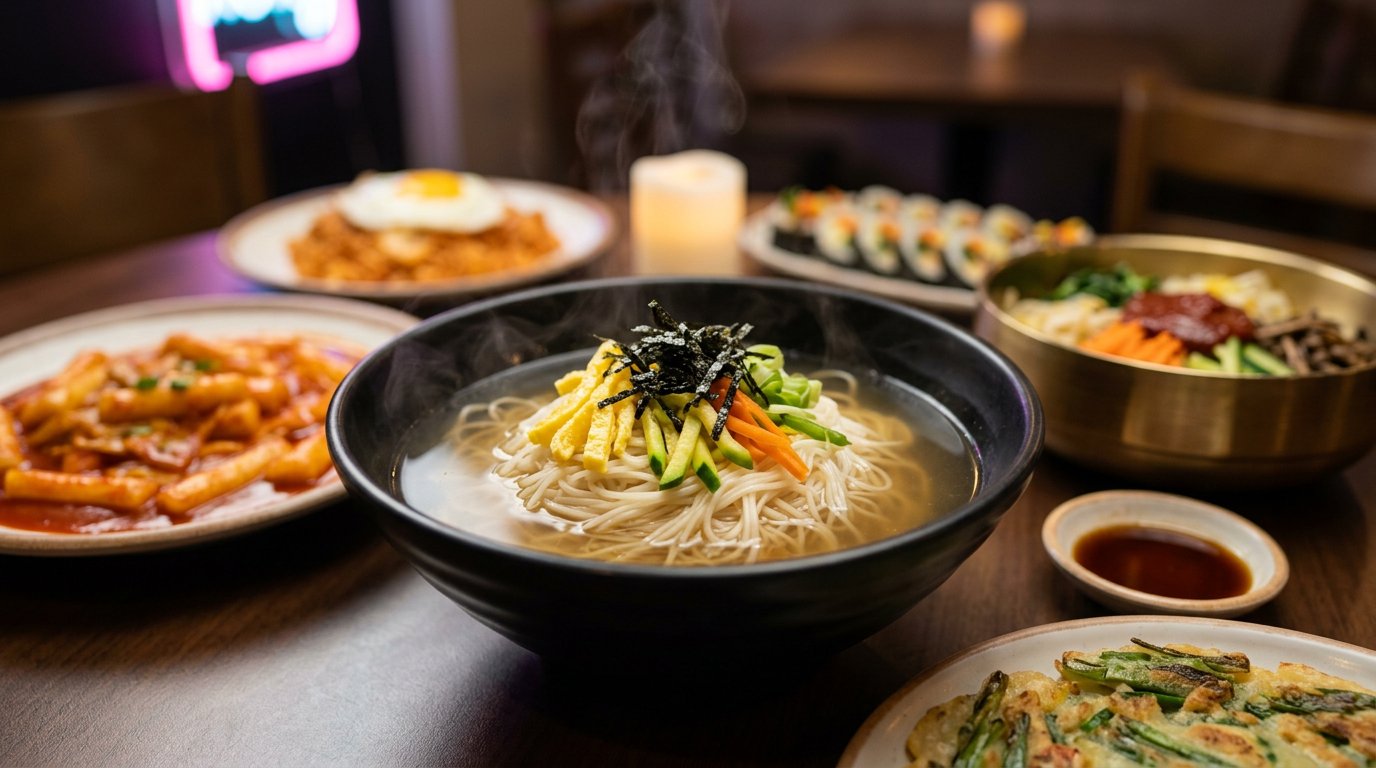
K-pop and K-drama Korean food can be a surprisingly good doorway into everyday Korean cooking. A singer makes one home dish in an interview, or a drama pauses over a bubbling soup, and suddenly viewers are searching for the name, the taste and the ingredients.
This guide is the place to start. It connects three verified pop-culture food stories—BTS making janchi-guksu, Rosé cooking kimchi fried rice, and the Korean-French dishes in Bon Appétit, Your Majesty—with seven more foods that help explain what you are seeing on screen.
My short list for beginners: Start with janchi-guksu if you want something mild, kimchi fried rice or tteokbokki if you want spicy comfort food, gimbap for a portable lunch, and Korean barbecue for a shared meal. Try gochujang butter bibimbap when you want the most obvious Korean-meets-Western fusion.
Editorial note: K-Food Explained is not affiliated with any artist, entertainment company, broadcaster or streaming service mentioned here. I only connect a celebrity with a dish when a direct public source supports it; the rest of this article explains broader Korean food culture.
Choose Your First Korean Food by Mood
| If you want… | Start with… | What to expect |
|---|---|---|
| Mild comfort | Janchi-guksu | Thin noodles in a light savory broth |
| Fast pantry food | Kimchi fried rice | Tangy, savory rice with flexible toppings |
| Chewy and spicy | Tteokbokki | Rice cakes in a sweet-hot red sauce |
| A complete rice bowl | Bibimbap | Rice, vegetables, egg and sauce mixed together |
| Easy portable food | Gimbap | Seasoned rice and fillings rolled in seaweed |
| A shared night out | Korean barbecue or chimaek | Grilled meat, or fried chicken with beer |
| Deep fermented flavor | Doenjang soup | Earthy, savory soybean-paste broth |
Three K-Pop and K-Drama Food Stories to Read First
BTS and Korean “Party Noodles”
Jin, Jimin and V made janchi-guksu and misugaru in a 2026 Vogue cooking feature. The noodle soup is light and familiar rather than flashy: thin wheat noodles, clear broth, egg and vegetables, with seasoned soy sauce added at the table.
The name means “banquet noodles,” reflecting the dish’s connection with weddings and celebrations. The same bowl is also an ordinary, inexpensive comfort meal in modern Korea.
Read the BTS janchi-guksu and misugaru guide →
Rosé’s Kimchi Fried Rice
Rosé cooked kimchi fried rice for Vogue with Spam, gochujang, egg, rice, sugar and olive oil. Her large pile of cilantro is the personal twist. She also introduced somaek and dried squid with Cheongyang chili mayo.
This is a useful example of how Korean home food works: the basic idea is recognizable, but every cook adjusts the protein, spice, sweetness and toppings to the ingredients in the kitchen.
See Rosé’s Vogue kimchi fried rice explained →
The Food in Bon Appétit, Your Majesty
The drama moves between Korean home flavors, Joseon-inspired court presentation and modern French fusion. Gochujang butter bibimbap, spinach doenjang soup, doenjang pasta, Dongnae pajeon, black sesame macarons and pressure-cooked black chicken all show different parts of that idea.
Not every beautiful plate in a historical drama is an authentic royal recipe. The production researched period ingredients and techniques, but the story deliberately asks what a modern French-trained chef might invent with Korean ingredients in the past.
Explore 12 dishes from Bon Appétit, Your Majesty →
10 Korean Foods to Know from K-Pop and K-Dramas
1. Janchi-Guksu: Light Korean Party Noodles
Janchi-guksu uses very thin wheat noodles in an anchovy-and-kelp broth, often with egg strips, zucchini, carrot, seaweed and scallion. It is usually mild unless you add spicy seasoning sauce.
Try this first if red Korean dishes look intimidating. The important shopping words are somyeon or somen for the noodles. A kelp-and-mushroom broth works for a vegetarian version, but traditional broth normally contains fish.
2. Kimchi Fried Rice: Flexible Refrigerator Food
Kimchi bokkeumbap turns ripe, sour kimchi and leftover rice into a fast meal. Pork, Spam, bacon, tuna, tofu or mushrooms can add substance, and a fried egg gives the bowl richness.
Use cold rice if possible so the grains separate rather than turning soft. Taste before adding soy sauce: kimchi, gochujang and processed meat may already provide enough salt. If you need help choosing the main ingredient, compare options in my store-bought kimchi guide.
3. Bibimbap: Mix the Whole Bowl
Bibimbap brings rice, seasoned vegetables, sauce and often egg or meat into one bowl. The point is to mix the components so each spoonful has rice, vegetables and seasoning—not to preserve the decorative arrangement.
The gochujang butter version in Bon Appétit, Your Majesty is modern fusion. Browned butter replaces the familiar nutty role of sesame oil and softens the chile heat. For a more everyday bowl, use sesame oil and add gochujang gradually.
4. Doenjang Soup and Stew: Earthy Fermented Comfort
Doenjang is Korean fermented soybean paste. In soup or stew it creates a deep, earthy, salty broth that may contain tofu, zucchini, mushrooms, clams or meat. It is not automatically spicy.
The clam-and-spinach soup in Bon Appétit, Your Majesty is closer to Korean home cooking than the show’s French competition plates. If your local store has only miso, read my tested doenjang substitute guide before using the same quantity.
5. Tteokbokki: Chewy, Sweet and Spicy
Tteokbokki is made with chewy Korean rice cakes in a thick red sauce, commonly joined by fish cake and scallion. The sauce usually combines gochujang, sweetness and savory stock, so reducing the red paste changes more than heat.
Rice cakes are the ingredient worth finding because pasta and gnocchi do not reproduce their dense bounce. My tteokbokki recipe for cooks outside Korea explains fresh, frozen and dried rice cakes.
6. Ramyeon: More Than One Red Packet
Korean ramyeon usually refers to instant noodles, but brands and flavors vary widely. Not every packet is fire-level spicy. People add egg, scallion, dumplings, rice cakes, cheese or leftover vegetables depending on the product and appetite.
Do not assume every noodle bowl seen on screen uses the same seasoning. Check the package for allergens and spice information, especially when buying an imported product with a translated sticker.
7. Gimbap: The Portable Rice Roll
Gimbap wraps seasoned rice and cooked fillings in roasted seaweed. Common fillings include egg, carrot, spinach, pickled radish and meat or fish cake, but there are countless combinations.
It resembles a sushi roll from a distance, but the seasoning and fillings tell a different story. Gimbap rice commonly uses sesame oil and salt rather than sushi vinegar, and the fillings are usually cooked or pickled. It works well for picnics, commuting and an easy shared lunch.
8. Korean Fried Chicken and Chimaek
Chimaek combines chikin (chicken) and maekju (beer). Korean fried chicken may be plain and crisp, coated in a sweet-spicy sauce, or seasoned with garlic, soy or cheese-style powder.
The combination appears festive on screen because it is built for sharing. Beer is optional; sparkling water, barley tea or soda can accompany the same meal. My Korean alcohol guide explains chimaek, somaek and anju without treating drinking as mandatory.
9. Jjajangmyeon: Korean-Chinese Delivery Comfort
Jjajangmyeon is a Korean-Chinese noodle dish covered in a glossy black sauce made with chunjang, vegetables and usually pork. The flavor is savory, slightly sweet and less fiery than its dark appearance may suggest.
It is strongly associated with restaurant delivery and casual meals, which is why a quick noodle order can communicate ordinary daily life on screen. Do not confuse the black sauce with doenjang: both involve fermented beans, but they are different products with different flavors and uses.
10. Korean Barbecue: Build Each Bite Yourself
Korean barbecue is not one fixed recipe. A table may feature samgyeopsal (pork belly), galbi (ribs), bulgogi or another cut, with lettuce, garlic, sauces, kimchi and banchan around the grill.
The experience is interactive. You grill, cut and combine meat with vegetables and sauce according to taste. At home, prioritize safe ventilation, a suitable cooking surface and normal meat-handling rules rather than trying to imitate dramatic tabletop flames.
How to Start Without Buying an Entire Korean Pantry
- Choose two dishes first. Pick one mild dish and one spicy dish so the same shopping trip teaches you more than one flavor profile.
- Buy the defining ingredient. Real rice cakes matter for tteokbokki; ripe kimchi matters for fried rice; doenjang matters for fermented soybean soup.
- Use local basics freely. Rice, eggs, garlic, onions and common vegetables do not need a Korean brand.
- Read the label. Imported sauces can differ in wheat, soy, seafood, sweetness, spice and storage instructions.
For a practical shopping plan, start with the Korean ingredients and substitutes hub. US readers can compare sellers in the guide to buy Korean ingredients online. Readers elsewhere can use the product-category and Korean-label tips even when the retailer names differ.
Dietary and Allergy Notes
- Kimchi may contain fish sauce or salted shrimp.
- Gochujang, doenjang, soy sauce, ramyeon and noodles may contain wheat and soy.
- Traditional janchi-guksu broth and many tteokbokki stocks contain fish.
- Gimbap, fried rice and bibimbap often contain egg, sesame or meat.
- Restaurant cross-contact is possible even when a dish appears vegetarian.
Check every package rather than relying only on the English product name. The Korean food label guide shows where to find ingredients, allergens, origin, storage and date information.
Frequently Asked Questions
What Korean food should a K-drama beginner try first?
Try gimbap or janchi-guksu for mild flavors, bibimbap for a complete rice bowl, or tteokbokki if you already enjoy chewy textures and chile-based sauces.
Is all Korean food shown in K-dramas spicy?
No. Janchi-guksu, many gimbap fillings, grilled meat, egg dishes and clear soups can be mild. Even red sauces vary greatly in heat.
Are celebrity Korean food recipes official?
Only when the artist or an official publisher actually releases the ingredients or method. The BTS and Rosé guides here are based on their Vogue cooking features and clearly separate what was shown from practical home interpretation.
Can I make these foods vegetarian?
Many can be adapted with mushroom, kelp or vegetable broth and tofu or mushrooms instead of meat. Check kimchi, sauces and stock products because seafood ingredients may be hidden in otherwise vegetable-heavy dishes.
Where should I learn more about Korean dining culture?
Use the Korean food culture and etiquette hub for shared-table customs, holidays, banchan, alcohol and the difference between formal traditions and everyday modern meals.
My recommendation: Let K-pop or a drama spark the first question, then learn the food on its own terms. One careful bowl of party noodles or kimchi fried rice will teach you more about Korean cooking than a list of unverified celebrity “favorites.”
Primary entertainment sources: Vogue’s BTS cooking feature; Vogue’s Rosé cooking feature; and Netflix Tudum’s official Bon Appétit, Your Majesty page.
🛒 Make Tteokbokki Tonight
- Instant tteokbokki kit — street-food flavor in minutes → View on Amazon
- Tteokbokki rice cakes — chewy cylinders for homemade tteokbokki → View on Amazon
- Gochujang (Korean chili paste) — the backbone of Korean cooking → View on Amazon
This post contains affiliate links. As an Amazon Associate, I earn from qualifying purchases.
