

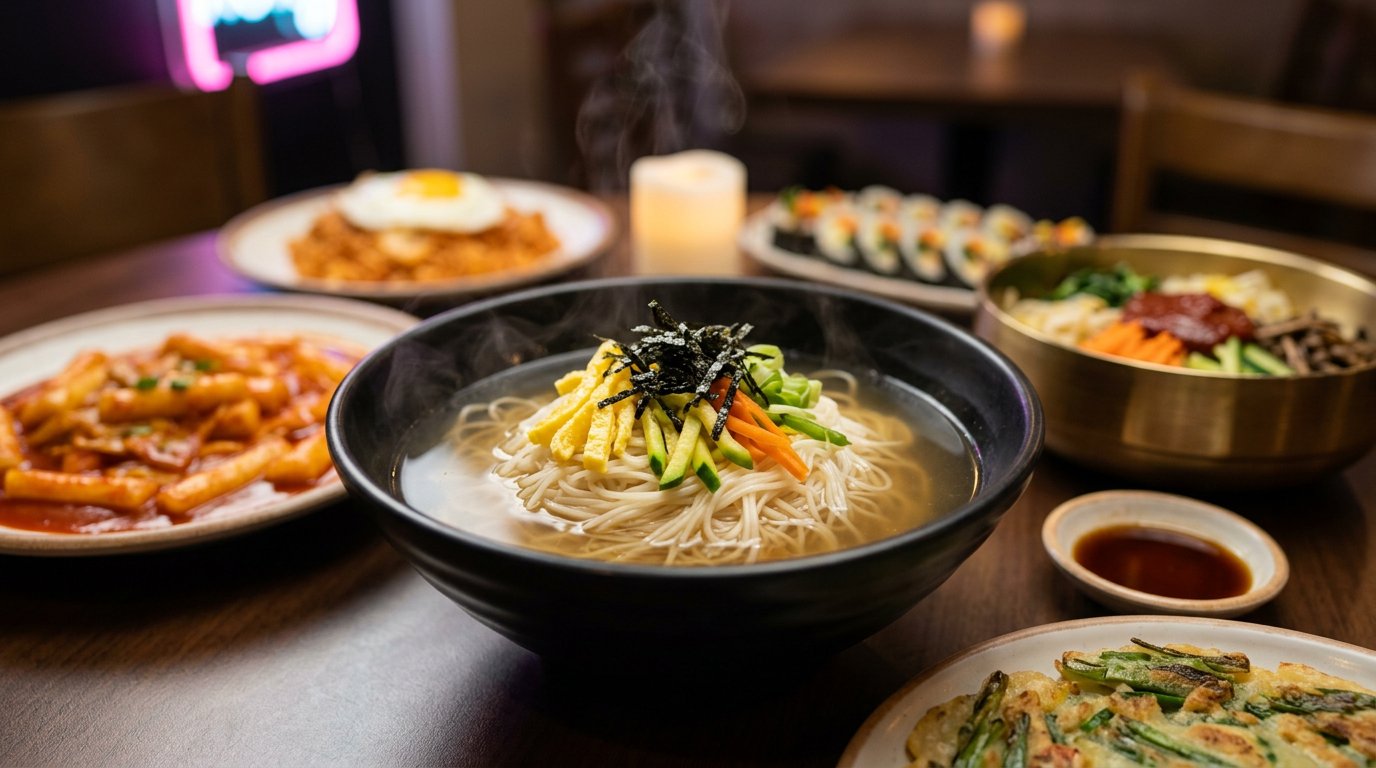
You, 1 a.m.: “just one more episode.”
Also you, 1:04 a.m.: pausing the drama to google “what is that bubbling red soup” with the focus of a detective.
In K-dramas, food is never just food. It’s a plot point.
Ramyeon can be a flirt line. Jjajangmyeon means moving day (or being single). Noodles mean a wedding. Below: 10 dishes you keep seeing on screen, what the scene is secretly saying, and the easiest way to eat each one tonight.
Start mild with kimbap or janchi-guksu. Want spicy comfort? Tteokbokki or kimchi fried rice.
Need a 2-minute who’s who of Korean dishes before your next episode? It plays right here.
3 celebrity food moments (the real ones)
The internet is full of “Jungkook’s favorite food” lists with zero sources. These three actually happened on camera.
- BTS made janchi-guksu. Jin, Jimin and V cooked “party noodles” and misugaru for a 2026 Vogue feature. Light broth, thin noodles, egg strips. The BTS janchi-guksu guide
- Rosé made kimchi fried rice. With Spam, gochujang, egg and an alarming (respectfully) pile of cilantro, for Vogue. Rosé’s kimchi fried rice, explained
- Bon Appétit, Your Majesty mixes Joseon court food with French fusion: gochujang butter bibimbap, doenjang pasta, black sesame macarons. Not every pretty plate is a real royal recipe, and that’s the point. 12 dishes from the drama
The noodle scenes (and what they really mean)
“Want to come up for ramyeon?” has never once in Korean cinema been about ramyeon.
1. Ramyeon: the flirt line
“Want to eat ramyeon before you go?” (라면 먹고 갈래?) is Korea’s most famous pickup line, made famous by the 2001 film One Fine Spring Day. So when a drama couple is standing at a door at night talking about instant noodles, read the room. In real life, ramyeon is just the 4-minute meal everyone eats straight out of the pot lid. Not every packet is fire-level, either: my ramyeon ranking starts mild, and 10 ways Koreans tweak a pack.
2. Jjajangmyeon: moving day and single day
Korean-Chinese noodles in a glossy black-bean sauce, savory and a little sweet, less fiery than they look. On screen, they mean two things. One: moving day, when the kitchen is still in boxes and everyone eats delivery jjajangmyeon on the floor. Two: April 14, “Black Day,” when singles who got nothing on Valentine’s and White Day eat black noodles together. Yes, really. (Don’t confuse the black sauce with doenjang. Both are fermented beans, totally different flavors.)
3. Janchi-guksu: “when are you feeding us noodles?”
Thin wheat noodles in a light anchovy-kelp broth with egg, zucchini and seaweed. Mild, cozy, the best first bowl if red Korean food scares you. The name means “banquet noodles,” which is why a drama auntie asking “when are you going to feed us noodles?” (국수 언제 먹여 줄 거야) is really asking when you’re getting married. Shopping word: somyeon (or somen). Veggie version: kelp + mushroom broth.
The rice scenes
Heartbroken drama lead + giant mixing bowl + way too much rice = the most relatable scene in Korean TV.
4. Bibimbap: the breakup bowl
Rice, seasoned vegetables, gochujang, often an egg. In restaurants it’s pretty. In dramas, it’s someone dumping every side dish from the fridge into a huge metal bowl (yangpun, 양푼) and eating it sobbing. The rule either way: mix it all, wreck the pretty arrangement, that’s the assignment. For a softer, fancier version, the drama’s gochujang butter bibimbap swaps sesame oil for browned butter.
5. Kimbap: the field-trip lunch
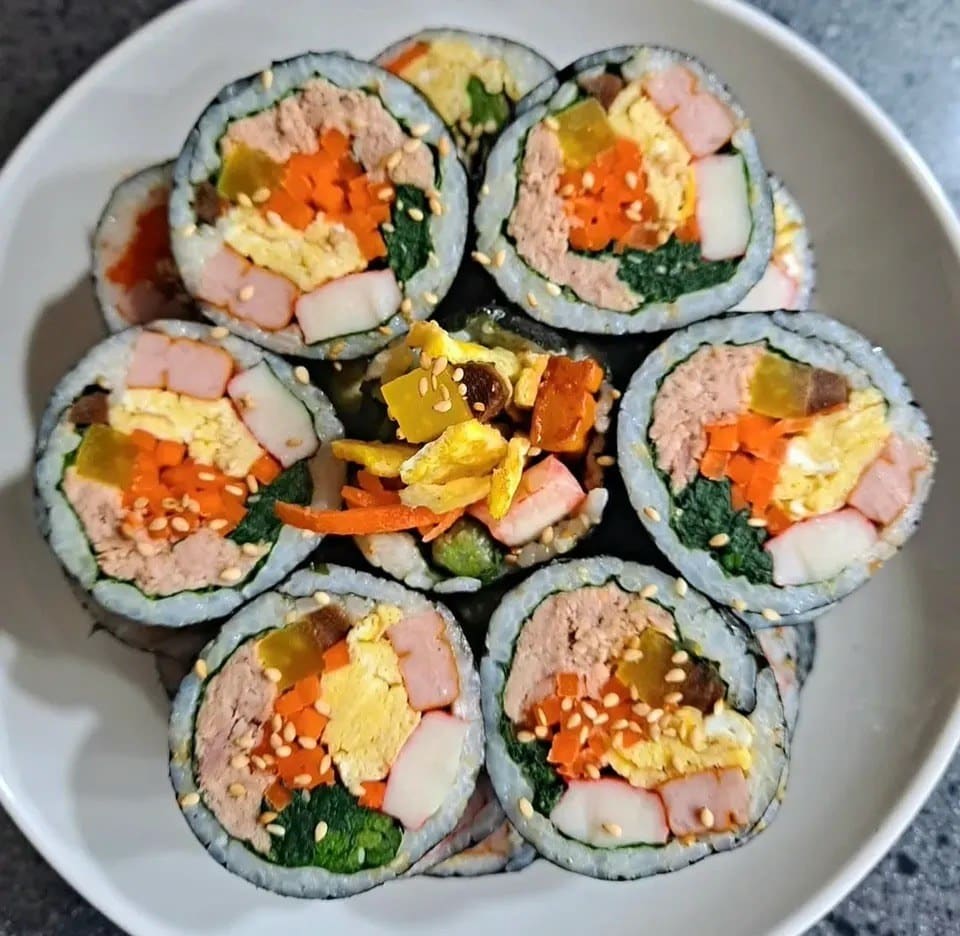
Seasoned rice and cooked or pickled fillings rolled in seaweed. Looks like sushi from far away, but the rice gets sesame oil and salt, not vinegar. On screen, a mom rolling kimbap at dawn means it’s school picnic or sports day, and every Korean adult in the audience can smell it.
6. Kimchi fried rice: the “I live alone” meal
Sour, ripe kimchi + leftover rice + Spam or tuna + a fried egg. It’s the dish a drama character makes at midnight in a tiny one-room apartment, standing at the stove. Use cold rice so the grains stay separate, and taste before adding soy sauce, because kimchi, gochujang and Spam already bring salt. Kimchi picks: my store-bought kimchi ranking.
The comfort and party scenes
If a character orders chicken, they’re celebrating. If they order chicken alone, they’re also celebrating. Chicken is always correct.
7. Tteokbokki: the after-school snack
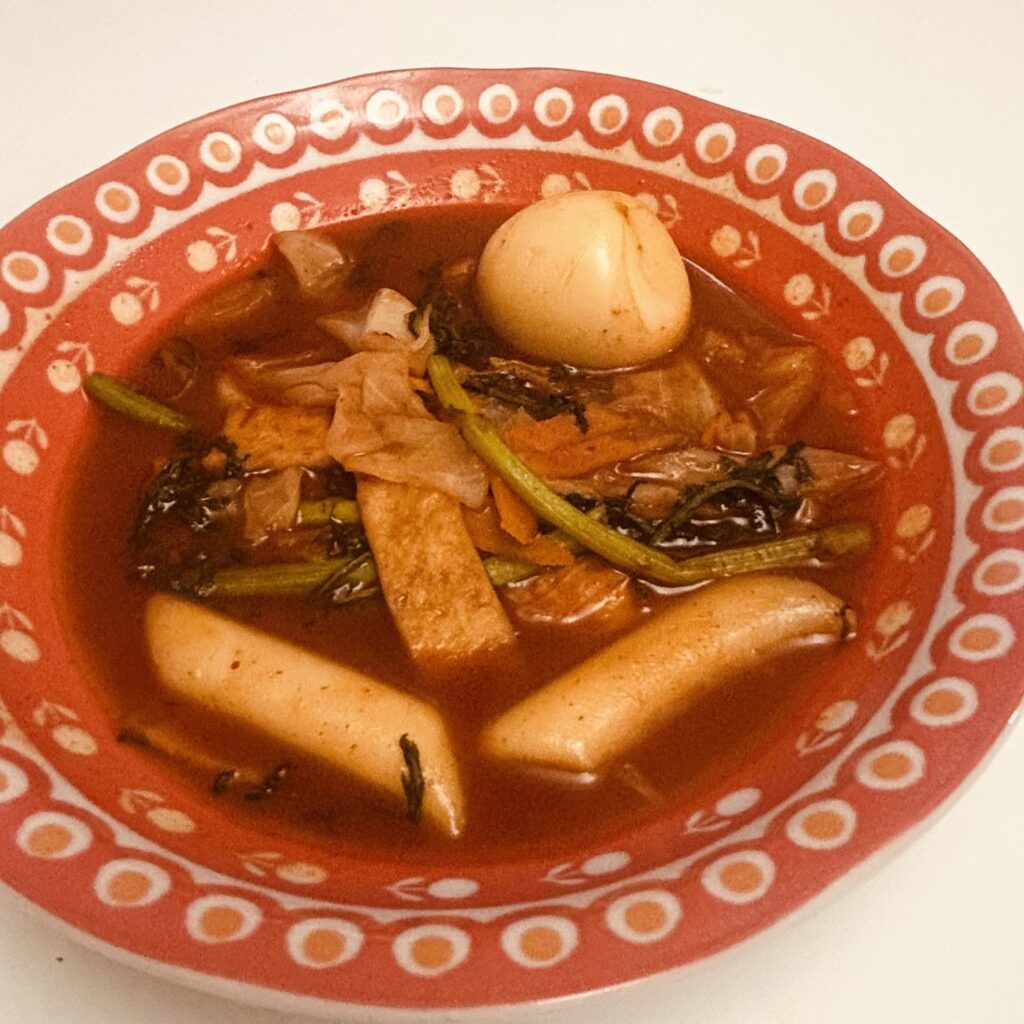
Chewy rice cakes in a sweet-spicy red sauce with fish cake and scallion. Drama high schoolers eat it at a street stall in their uniforms; adults eat it to feel 17 again. The rice cakes are the one thing you can’t fake with pasta or gnocchi. Fresh, frozen or vacuum-packed: my tteokbokki guide.
8. Chimaek: chicken + beer
Chi(cken) + maek(ju, beer). The 2014 drama My Love from the Star turned it into a craze across Asia. Fried chicken can be plain and crispy, sweet-spicy, garlic-soy or dusted with cheese powder. Beer is optional; cola or barley tea does the same job. My chimaek guide
9. Korean BBQ: the team dinner
Pork belly, galbi or bulgogi on a table grill, lettuce, garlic, ssamjang, a dozen side dishes. In dramas, whoever holds the meat scissors is quietly in charge. At home, ventilation is your best friend: Korean BBQ at home, without the smoke alarm.
10. Doenjang stew: the “mom’s cooking” scene
Fermented soybean paste stew with tofu, zucchini, mushrooms, sometimes clams. Earthy, salty, not automatically spicy. When a drama character comes home after a terrible day and there’s a bubbling ttukbaegi on the table, this is it. Only have miso? Read my doenjang substitute guide before using the same amount.
Your binge-watch starter kit
Four things cover at least half of the dishes above. Rice, eggs and garlic come from any supermarket.
Nongshim Shin Ramyun · 20 pouches · CJ Haechandle gochujang · 500 g · Jongga napa kimchi · 8 pouches · Tteokbokki rice cakes · 600 g
Amazon Prime members may see free two-day delivery on eligible items. Rice cakes: check the date. More: Korean ingredients and substitutes · where Korean groceries ship, by country.
Allergy and diet notes
Kimchi may contain fish sauce or salted shrimp. Gochujang, doenjang, soy sauce, ramyeon and noodles may contain wheat and soy. Traditional janchi-guksu broth and many tteokbokki stocks contain fish. Kimbap, fried rice and bibimbap often contain egg, sesame or meat. Check every package, not just the English name: how to read Korean food labels.
Quick questions
What Korean food should a K-drama beginner try first?
Kimbap or janchi-guksu for mild flavors, bibimbap for a full rice bowl, tteokbokki if you like chewy textures and spicy sauce.
Is all K-drama food spicy?
No. Janchi-guksu, most kimbap, grilled meat, egg dishes and clear soups are mild, and even red sauces vary a lot.
Are celebrity Korean recipes official?
Only when the artist or an official publisher shows the ingredients or method. The BTS and Rosé guides here are based on their Vogue cooking features.
Sources
Vogue: BTS cooking feature · Vogue: Rosé cooking feature · Netflix Tudum: Bon Appétit, Your Majesty. K-Food Explained isn’t affiliated with any artist, company or streaming service mentioned here.
So, which scene got you googling? Mine would be the giant breakup bibimbap. Every time.
Next read: 10 ramyeon hacks Koreans actually use · Korean food culture, the stuff dramas don’t explain
Got a question? Leave a comment.
Written by Jina Moon, a 40s unnie back in Seoul who has absolutely paused a drama to stare at a stew.
Disclosure: This post contains affiliate links. If you buy through my links I may earn a small commission at no extra cost to you. As an Amazon Associate I earn from qualifying purchases.
