
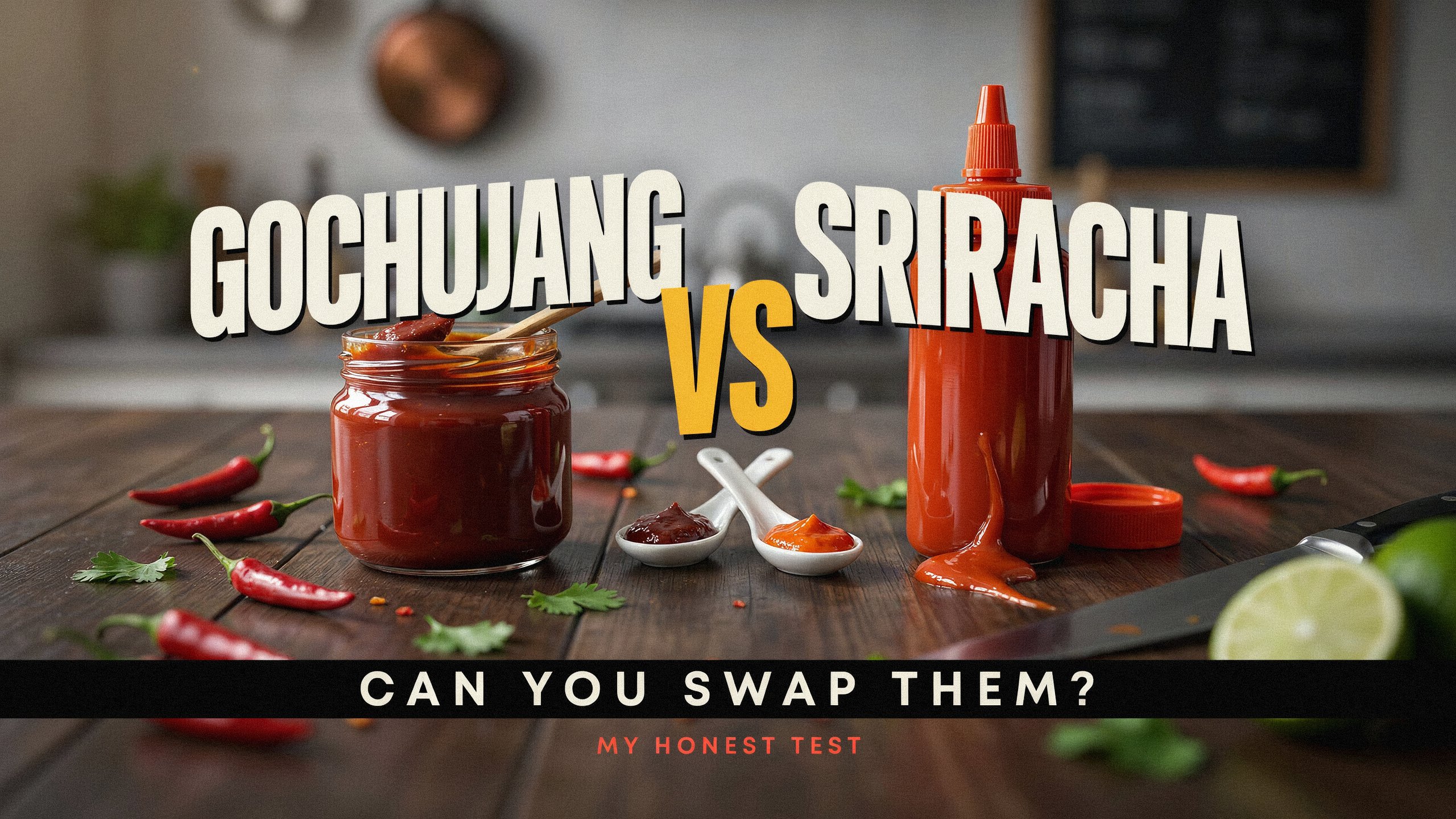
Let’s settle the gochujang vs sriracha debate the honest way — I cooked the same dishes with both, side by side.
Two red bottles, sitting in the same fridge, same spicy vibe. It’s the question I see in comments again and again: “Can I just use sriracha instead of gochujang?”
I get it. Sriracha is in every fridge in America. Gochujang is the one you had to order online and still aren’t 100% sure you bought the right thing. So one night, I decided to stop guessing and actually test it: I cooked the same three dishes with gochujang and with sriracha, side by side.
Here’s what happened.
Quick Answer: Can You Swap Sriracha for Gochujang?
For dipping sauces and marinades: yes, with fixes. For tteokbokki and anything where gochujang is the star: no. Sriracha brings heat and vinegar, but it’s missing the two things that make gochujang gochujang: fermentation and thickness. You can bridge that gap with two pantry ingredients — here’s how below.
What Sriracha Actually Is
Sriracha is a Thai-style hot sauce: fresh red chilies, garlic, sugar, salt, and vinegar, blended into a smooth, pourable sauce. The rooster-bottle version that everyone has is actually made in California — it’s bright, tangy, and garlicky, but it’s not fermented. That’s the key word.
What Gochujang Actually Is
Gochujang is a fermented Korean chili paste: red chilies, glutinous rice, fermented soybeans, and salt, aged for months in earthenware. It’s thick — almost like a paste — and it has layers: sweet, spicy, and a deep, funky umami that only fermentation creates. You don’t squeeze it; you scoop it.
Gochujang vs Sriracha: Side by Side
| Gochujang | Sriracha | |
|---|---|---|
| Texture | Thick paste | Thin, pourable sauce |
| Fermented? | Yes — months of aging | No (vinegar-based) |
| Flavor profile | Sweet + spicy + umami | Tangy + garlicky + hot |
| Sweetness | From glutinous rice | From sugar |
| Heat | Warm, builds slowly | Sharp, hits fast |
| Color | Deep red-brown | Bright red |
| Best for | Korean dishes, stews, marinades | Eggs, sandwiches, pho, tacos |
CJ Haechandle gochujang · 500 g tub (Amazon) → · Sempio vegan gochujang · 500 g tub (iHerb 5% off) → · CJ Haechandle gochujang · 500 g tub (Walmart) → · Sempio gochujang · 500 g tub (Instacart) →
Huy Fong sriracha chili sauce · 17 oz (Amazon) → · Huy Fong sriracha chili sauce · 17 oz (Target) → · Huy Fong sriracha chili sauce · 17 oz (Walmart) → · Huy Fong sriracha chili sauce · 17 oz (Instacart) →
My Kitchen Test: 3 Dishes, 2 Sauces
Test 1: Tteokbokki (where gochujang is 100% of the sauce)
Result: sriracha failed. The sauce came out thin and watery, the rice cakes didn’t soak up any depth, and it tasted like spicy soup instead of glossy tteokbokki. There was no way to fix it with sriracha alone — it needed the paste-like body and the fermented backbone of gochujang.
Test 2: Bulgogi-style marinade (where gochujang is about 1/3)
Result: sriracha passed, with one addition. The soy sauce, garlic, sesame and sugar in the marinade covered most of the difference. Sriracha even added a nice garlicky kick. The only thing missing was body, so I added half a teaspoon of sugar and it was genuinely good.
Test 3: Dipping sauce (gochujang + sesame oil + honey)
Result: surprisingly close. With the honey and sesame oil doing heavy lifting, sriracha-based dip was maybe 80% there. I’d serve it to guests without apology.
How to Swap Properly (The 3 Fixes)
If you’re out of gochujang and only have sriracha, here’s exactly what to do:
- Add umami: ½ teaspoon of miso paste or a splash of soy sauce per tablespoon of sriracha — this mimics the fermentation you’re missing.
- Thicken it: for sauces, simmer it down or add a tiny bit of cornstarch slurry. Tteokbokki still won’t be the same, but stews and stir-fries will hold up better.
- Balance the vinegar: sriracha is tangy, so add a little sugar or honey to restore gochujang’s sweetness.
When NOT to Swap
- Tteokbokki, gochujang jjigae, or any dish where gochujang is the whole sauce. The texture alone will break it.
- When the recipe has few ingredients. The fewer flavors around it, the more the swap shows.
In those cases, honestly — just use my homemade gochujang-style paste (doenjang + gochugaru + sugar). It takes two minutes and beats sriracha by a mile for Korean cooking.
My Verdict on Gochujang vs Sriracha
Sriracha is a great sauce. It is not gochujang. For Korean cooking, keep both in the pantry — they’re not rivals, they’re different tools. But if a Korean recipe calls for gochujang and you reach for the rooster bottle, remember the three fixes: umami, thickness, sweetness. With those, you can rescue dinner. Without them, you’ll taste the difference immediately — I did.
→ Where to buy real gochujang: Where to Buy Korean Ingredients Online (label photos)
My final take on gochujang vs sriracha: keep both, but never confuse them. For Korean cooking, the real thing wins — here’s where I buy it.
Neither sauce needs special equipment, but the pot might. Korean cookware is often built for gas, and induction is unforgiving about it.
Shopping from outside the US? how the same order ships outside the US is the part most guides skip.
Shop These Gochujang & Sriracha Essentials by Store
Amazon (Prime delivery & 90-day cart guarantee)
CJ Haechandle gochujang · 500 g tub → · Huy Fong sriracha hot chili sauce · 17 oz bottle →
iHerb (Direct global delivery & 5% rewards discount with code PNF305)
Sempio vegan gochujang · 500 g tub (5% OFF with code PNF305) →
Walmart (Curbside pickup & 2-day delivery)
CJ Haechandle gochujang · 500 g tub → · Huy Fong sriracha hot chili sauce · 17 oz squeeze bottle →
Target (Order Pickup, Drive Up & same-day delivery)
Huy Fong sriracha chili sauce hot · 17 oz →
Instacart (Same-day local Korean & Asian market delivery)
Sempio gochujang chili paste · 500 g tub → · Huy Fong sriracha hot chili sauce · 17 oz →
