
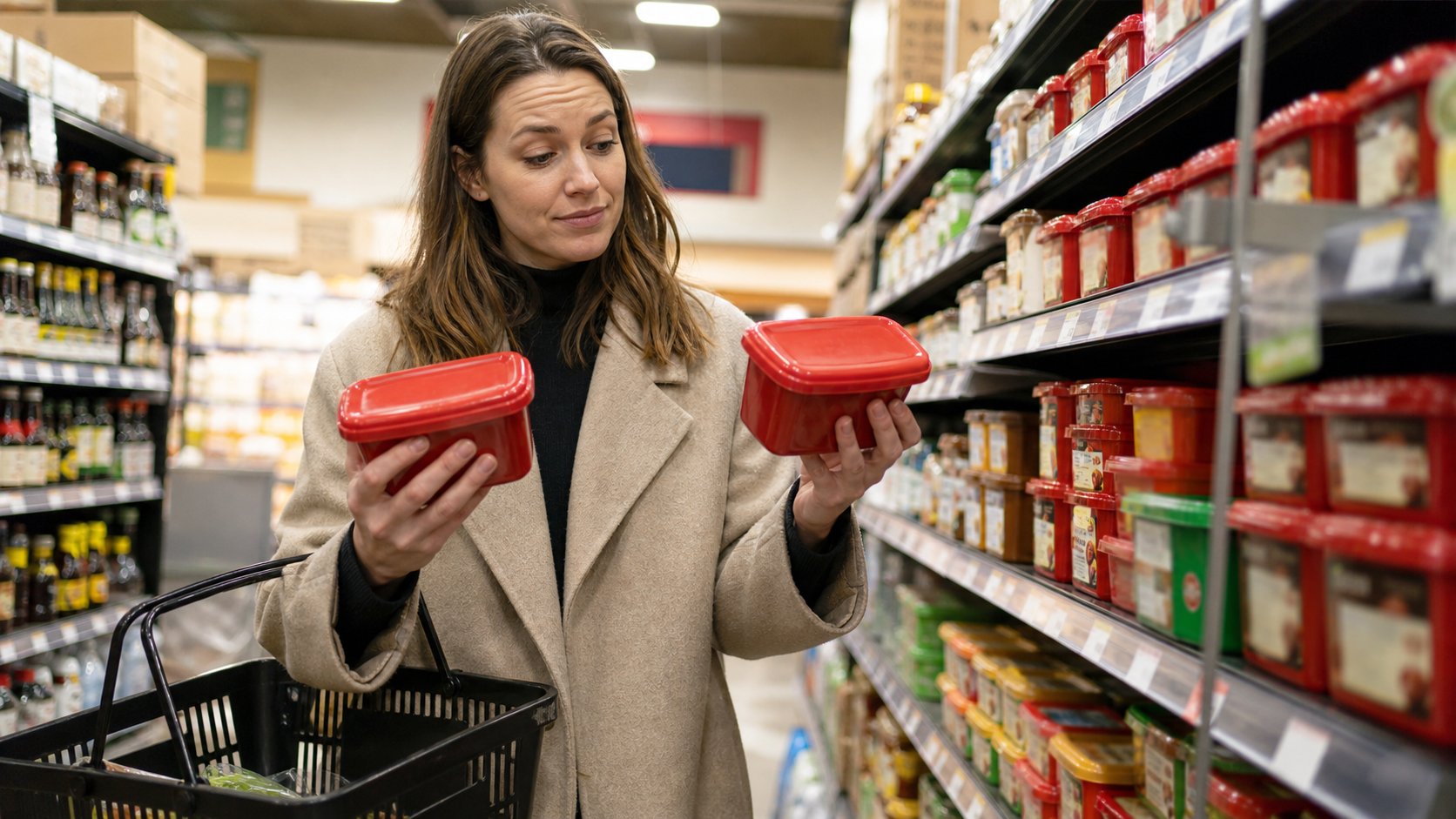
A good Korean grocery shopping guide exists for one reason: to stop dinner from turning into an expensive identity crisis. You wanted gochujang. You came home with cho-gochujang. You wanted soup soy sauce, and instead you bought the bottle that turned your entire pot the color of black coffee. The packaging looked so confident about itself. The tiny English sticker offered no support whatsoever. And now there are six nearly identical red tubs on your counter, silently judging your life choices.
Relax. This happens to everyone, and it is not a you problem. Korean grocery stores are organized for shoppers who already know the difference between tteokguk-tteok and tteokbokki-tteok, or between jin-ganjang and guk-ganjang, the way you already know the difference between “regular milk” and “the milk that ruins your coffee.” If nobody ever taught you those names, the shelf isn’t a grocery aisle. It’s a pop quiz you didn’t study for.
Quick answer: before you buy a Korean ingredient, check four things — the exact product name, the dish it’s meant for, its heat or fermentation level, and whether it needs to live in the fridge. Never, ever choose by tub color alone. Korean brands love recycling the same reds, browns and greens across products that behave nothing alike once they hit a hot pan.
This guide walks through ten Korean ingredient buying mistakes I see (and have personally made) over and over — why they happen, how to dodge them, and what to grab instead. Bookmark it before your next H Mart trip, or before an online listing convinces you that a three-kilogram tub of gochujang is a “convenient pantry size.” It is not. Nothing is that convenient.
Affiliate disclosure: This article may contain affiliate links. If you buy through them, I may earn a small commission at no extra cost to you. Product packaging and ingredients change, so always double-check the current label before you trust me over your own eyes.
Mistake 1: Buying the hottest gochujang because “authentic” must mean painful
AMAZON US · CJ Haechandle · 500 g tub →
You grab the tub with the angriest-looking pepper on the label, because obviously the fiercer the artwork, the more “real” it is. One spoonful into your tteokbokki later, dinner has quietly become an endurance sport, and you are sweating in a way that has nothing to do with the weather.
Gochujang heat varies a lot by brand. Some packages actually show a numbered scale or words like mild, medium hot or very hot — if you know to look. Tub color is not a heat code, no matter how convincing it looks, and online product photos sometimes show an older label than what actually ships to you.
Read the front and back of the label like it owes you money. For your first tub, go mild or medium — you can always throw in more gochugaru later to turn the heat up. Removing heat once it’s already in the pot, on the other hand, requires a full negotiation involving dairy, sugar and possibly prayer.
What to buy instead: A small or medium tub labeled Korean red pepper paste, with a clearly marked mild-to-medium heat level. If the listing doesn’t show you the heat label and ingredient panel, that’s your cue to keep scrolling. See the gochujang guide and emergency substitutes.
Mistake 2: Confusing gochujang, ssamjang and cho-gochujang
AMAZON US · O’Food ssamjang, spicy · 500 g tub →
You reach for a red squeeze bottle thinking “bibimbap sauce,” only to discover it tastes sharply sweet and sour. Or you spoon ssamjang straight into your tteokbokki and can’t figure out why dinner suddenly tastes like a Korean barbecue lettuce wrap that lost its lettuce.
These three love to hide behind similar red, brown or green packaging like they’re in on a joke together. Gochujang is fermented red pepper paste, full stop. Ssamjang is a ready-to-eat dipping paste, usually built from doenjang and gochujang plus seasonings. Cho-gochujang is a sweet-and-sour vinegared red pepper sauce. Same neighborhood, very different personalities.
Read the actual English product name, not just “oh, I recognize that tub.” If a recipe calls for plain gochujang, the ingredient panel shouldn’t read like it’s already a finished sauce.
What to buy instead: Plain gochujang as your versatile pantry base. Add ssamjang to the cart later, once you’re regularly doing Korean barbecue, lettuce wraps or raw veggie dipping.
Mistake 3: Buying Japanese miso when the recipe calls for Korean doenjang
AMAZON US · Sempio vegan original · 460 g tub → iHERB · Sempio vegan · 460 g tub → INSTACART · Sempio Doenjang · 460 g tub →
The recipe says soybean paste. The store has miso. Both are beige-brown and vaguely paste-shaped, so… close enough? Your doenjang-jjigae will beg to differ.
Both are fermented soybean seasonings, sure, but they’re not the same person wearing a different hat. Doenjang tends to be bolder, saltier and earthier; a lot of common misos lean smoother and sweeter. That gap matters most in dishes where the paste is basically the main character.
Look for “doenjang,” “Korean soybean paste,” or the Korean word 된장. Check the country of origin and the description carefully. Don’t trust the vague phrase “soybean paste” to do the work for you.
What to buy instead: For Korean stews and seasoned vegetables, get actual Korean doenjang. Miso can step in as a backup in some dishes, but expect a gentler result and go easy on the salt while you adjust. Read the tested doenjang substitute guide.
Mistake 4: Assuming one soy sauce can do every Korean job
AMAZON US · Sempio soup soy sauce · 860 ml →
You pour dark, slightly sweet soy sauce into a clear soup that was supposed to stay, well, clear. The soup is now brown, salty, and emotionally distant from the recipe photo that convinced you to make it.
Korean recipes call for different soy sauces depending on the job. Guk-ganjang (soup soy sauce) is lighter in color but often more intensely salty, so a small splash seasons soups without turning them muddy. Multipurpose brewed soy sauces are the better tool for marinades, braises and dipping sauces.
Match the bottle to the recipe. If it says guk-ganjang or 국간장, use it sparingly for soups and namul. For an all-purpose first bottle, grab a Korean brewed soy sauce — just know it will darken a clear soup if that’s not its job.
Label trap: “Light soy sauce” on a Chinese-style product line is not automatically the same thing as Korean soup soy sauce, even though the phrasing sounds friendly and familiar.
What to buy instead: Start with one Korean multipurpose brewed soy sauce. Add a small bottle of soup soy sauce once you’re regularly making miyeok-guk, kongnamul-guk or seasoned namul.
Mistake 5: Buying the wrong rice cakes for the dish
AMAZON US · Fusion Select tteokbokki sticks · 21.16 oz →
You planned a chewy, spicy tteokbokki night. You came home with thin oval slices. Technically, dinner still contains rice cakes. Spiritually, it has quietly transformed into New Year’s soup.
Long cylinders or short logs are typically sold for tteokbokki, while thin oval slices are meant for tteokguk. Wheat-based and rice-based tteokbokki cakes also chew differently. And refrigerated, frozen or shelf-stable packages can each need slightly different prep.
Shop by dish name and shape, not by “these look like the ones from the photo.” Check whether it’s rice or wheat, and follow the storage directions on the bag. If the frozen cakes are cracked, badly freezer-burned, or fused into what looks like a rice-cake fossil, leave them right there on the shelf.
What to buy instead: Cylindrical rice cakes labeled for tteokbokki when you want spicy rice cakes; oval sliced rice cakes labeled for tteokguk when you want soup. See the complete tteokbokki recipe for cooks outside Korea.
Mistake 6: Buying gochugaru without checking the grind or intended use
AMAZON US · Nongshim Taekyung coarse · 1 lb bag → WALMART US · Taekyung coarse · 1 lb bag →
You buy the finest, most vivid red powder on the shelf for your kimchi project, because finer surely means better, right? It colors everything beautifully and behaves absolutely nothing like the coarse flakes the recipe was expecting.
Gochugaru comes in different grinds and different heat levels. Coarser flakes are the standard for kimchi and a lot of sauces; finer powder is handy when you want a smoother texture or faster color release. And “red pepper” on its own can quietly mean a cayenne-style powder that is a lot hotter than you bargained for.
Check for “Korean red pepper flakes/powder,” look at the grind through the clear window on the bag, and see if it mentions kimchi use. Do not swap it one-for-one with cayenne unless a recipe specifically tells you to.
What to buy instead: A medium-coarse Korean gochugaru is the most flexible first purchase — good for kimchi, soups, stews and seasoning sauces. Buy a smaller bag, seal it tightly away from heat and light, and refrigerate or freeze it for longer storage.
Mistake 7: Buying a huge bottle of sesame oil because the unit price looks heroic
AMAZON US · OTOKI roasted sesame oil · 320 ml → INSTACART · Ottogi sesame oil · 10.8 fl oz →
The giant bottle is only a couple dollars more than the small one, so obviously you’re winning at math. Six months later, it smells less like toasted sesame and more like the back corner of a cupboard nobody has opened since a previous administration.
Toasted sesame oil is aromatic, which is exactly why it fades — exposure to air, light and heat wears it down fast. And most Korean recipes use it by the teaspoon, not the cup, so that “heroic” bottle sits open a lot longer than it should.
Buy what you can realistically finish, screw the cap on tight, and store it somewhere cool and dark per the label. Double-check it actually says toasted sesame oil, not a neutral oil blend wearing a sesame-colored costume.
What to buy instead: A small, dark or opaque bottle of 100% toasted sesame oil for finishing bibimbap, namul, dipping sauces and soups.
Mistake 8: Buying kimchi without checking temperature, age or style
AMAZON US · Jongga napa kimchi · 8 small pouches → INSTACART · Jongga vegan kimchi · 10.6 oz →
You order kimchi expecting something crisp and fresh, and receive a jar so sour it’s basically begging to be turned into stew. Or a pouch marketed as “convenient” arrives with a texture nothing like the refrigerated kimchi you fell in love with at a restaurant.
Kimchi never really stops fermenting — it keeps changing. Shipping temperature, time, style, cut and ingredients all shape the final flavor and texture. Vegan kimchi skips the seafood ingredients; some products are built for shelf stability, while others need to stay refrigerated the whole way home.
Decide how you’re actually going to eat it first. For eating fresh with rice, look for refrigerated napa cabbage kimchi and pay attention to delivery conditions. For jjigae or fried rice, more fermented, sour kimchi is actually a bonus, not a flaw. Always follow the storage instructions on the package.
What to buy instead: First-time buyers should start with a small refrigerated jar of sliced napa cabbage kimchi. Compare real options in my store-bought kimchi taste test.
Mistake 9: Treating every Korean seaweed package as interchangeable
You buy snack seaweed for gimbap. It tastes great — as a snack. The tiny seasoned sheets, however, cannot contain lunch, unless lunch is one extremely determined grain of rice.
“Seaweed” quietly covers a lot of ground: roasted sheets for gimbap, small salted snack packs, dried sea mustard for soup, and more. Seasoning and sheet size both matter a lot more than the word “seaweed” lets on.
For rolls, look for full-size sheets labeled gimbap gim or roasted seaweed sheets. For miyeok-guk, buy dried sea mustard labeled miyeok. For snacking, grab the small seasoned packs, and just accept that they will disappear before you’ve even finished unpacking the rest of the groceries.
What to buy instead: Unseasoned or lightly roasted full-size sheets for gimbap; individually portioned seasoned sheets for rice and snacking; dried cut miyeok specifically for soup.
Mistake 10: Assuming perilla leaves are sesame leaves — or exactly the same as shiso
An English sign says “sesame leaves,” so, reasonably enough, you go looking for leaves growing on the sesame plant. This search does not end well for anyone.
Korean kkaennip is commonly translated as sesame leaf, but it doesn’t actually come from the sesame plant that gives us sesame seeds — it’s perilla. Japanese shiso is a close relative, but its flavor and leaf character aren’t identical to Korean perilla either.
Look for “Korean perilla,” “kkaennip,” or 깻잎. Pick leaves that are vibrant and unwilted, without heavy blackening or slimy edges. If you’re subbing in shiso, go in expecting a different aroma, not an identical one.
What to buy instead: Fresh Korean perilla for wraps, jangajji and garnishes. Buy only what you’ll use soon, wrap it gently in a slightly damp paper towel, and refrigerate in a container.
Korean grocery shopping guide: quick label reference
| You want | Look for | Do not accidentally buy |
|---|---|---|
| Plain red pepper paste | Gochujang / 고추장 | Ssamjang or cho-gochujang |
| Korean soybean paste | Doenjang / 된장 | Miso when doenjang is the main flavor |
| Soy sauce for clear soup | Guk-ganjang / 국간장 | A dark, sweet multipurpose sauce |
| Spicy rice-cake cylinders | Tteokbokki-tteok / 떡볶이떡 | Oval tteokguk slices |
| Kimchi pepper flakes | Medium-coarse Korean gochugaru | Cayenne or generic crushed red pepper |
| Seaweed for rolls | Full-size gimbap gim | Small snack sheets or dried miyeok |
My 60-second check before buying
- Name: Does the English name match the actual Korean ingredient — not just the broad category it’s filed under?
- Use: Does the package mention the dish or purpose I actually need it for?
- Strength: Is there any clue about heat, salt or fermentation level?
- Storage: Is it refrigerated, frozen or shelf-stable — and can the seller actually ship it that way?
- Size: Will I realistically finish it before the flavor drops off?
- Label: Can I actually read the ingredients, allergens, origin and date?
For help with dates, allergens and origin statements, use my guide to reading Korean food labels. For retailer comparisons, see where to buy Korean ingredients online in the USA.
If price is what decides it for you, I also broke down per-gram price by store.
Bottom line
The safest purchase isn’t always the most famous brand or the biggest tub on the shelf. It’s the product whose type, purpose, strength and storage actually match the dish you’re planning to cook.
If you only take one rule away from this guide, make it this one: buy the label, not the tub color. That single habit will save you from most of the red-tub drama in your life.
Continue the “Buying Mistakes to Avoid” series
Next: Gochujang Buying Mistakes — Heat Levels, Tub Colors and Sauce Lookalikes.
Until then, explore the Korean pantry guides, or just bookmark this page for your next grocery run — future you will thank present you.
Shop the Products Mentioned Above by Store
1. AMAZON US Prime members may see free two-day delivery on eligible items and addresses; check the item and checkout.
CJ Haechandle · 500 g tub → O’Food ssamjang, spicy · 500 g tub → Sempio vegan original · 460 g tub → Sempio soup soy sauce · 860 ml → Fusion Select tteokbokki sticks · 21.16 oz → Nongshim Taekyung coarse · 1 lb bag → OTOKI roasted sesame oil · 320 ml → Jongga napa kimchi · 8 small pouches →
2. iHERB Eligible orders may receive 5% off with code PNF305; check the actual discount at checkout. Shipping and exclusions vary.
3. WALMART US Pickup, delivery and shipping vary by item and ZIP code; order minimums and fees may apply.
4. INSTACART Same-day grocery delivery or pickup may be available from participating stores in covered areas; fees and available slots vary.
Sempio Doenjang · 460 g tub → Ottogi sesame oil · 10.8 fl oz → Jongga vegan kimchi · 10.6 oz →
