
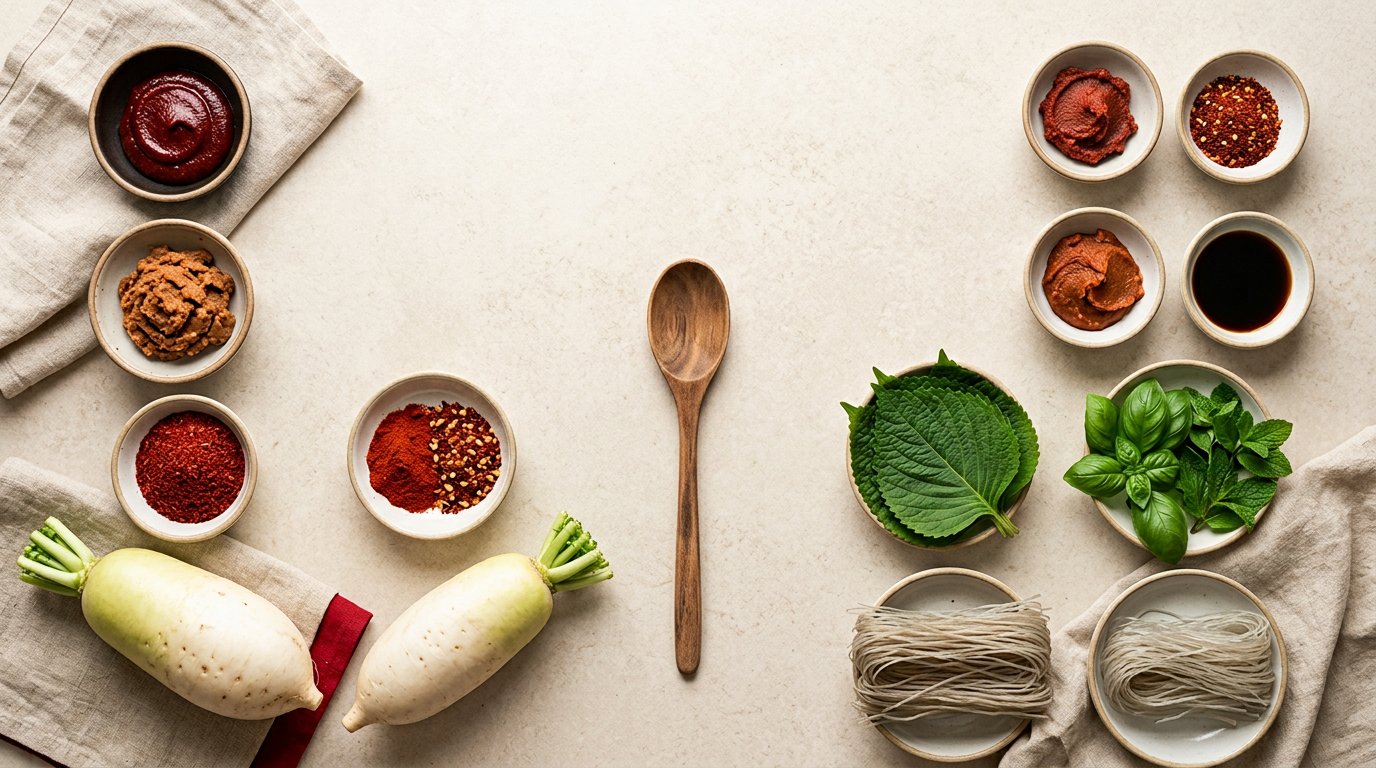
Need a Korean ingredient substitute right now? Use this quick-reference chart to find the closest easy-to-find replacement, the correct starting ratio, and the flavor difference to expect. These swaps are designed for home cooks outside Korea who may not have a Korean grocery store nearby.
Quick rule: If the Korean ingredient is the main flavor of the dish—such as gochujang in tteokbokki or doenjang in doenjang jjigae—buy the real ingredient when possible. If it is used in a marinade, dipping sauce, or as a small part of a larger recipe, a substitute usually works well.
As an Amazon Associate I earn from qualifying purchases. This page contains affiliate links, which may earn me a small commission at no extra cost to you.
Korean Ingredient Substitute Chart
The amounts below are starting points. Taste before adding more, especially when the substitute contains extra salt, sugar, or vinegar. Amazon links below lead to shopping options for the original ingredients. Confirm the product type, pack size and label on the destination page.
| Korean Ingredient | Western / Easy-to-Find Substitute | Flavor Difference | Where to Buy |
|---|---|---|---|
| Gochujang (Korean chili paste) | For 1 tbsp: mix 1 tsp red miso, 1 tsp specifically mild chili flakes (not cayenne), 1/2 tsp sugar, and 1/2 tsp water. | An approximate mixture, not the same fermented flavor or texture. Chili heat varies: if the flakes are not mild, the paste can become much too hot. | AMAZON · Buy gochujang on Amazon → iHERB · Sempio Vegan Gochujang (5–10% OFF) → INSTACART · Sempio Gochujang Tub (500g) → See 5 tested gochujang swaps → |
| Doenjang (Korean soybean paste) | For 1 tbsp: start with 1 tbsp red or awase miso. Taste the mixed dish, then add regular soy sauce only if needed, up to about 1/2 tsp as a guide—not a target. | Miso is smoother, sweeter, and less pungent. Red miso is closer than white miso, but doenjang has a deeper savory punch. | AMAZON · Buy doenjang on Amazon → iHERB · Sempio Vegan Doenjang (5–10% OFF) → INSTACART · CJ Haechandle Doenjang (1.1 lb) → See 5 tested doenjang swaps → |
| Gochugaru (Korean red pepper flakes) | For 1 tbsp: start with sweet paprika for color and a small pinch of red pepper flakes for heat; adjust gradually. There is no reliable universal ratio for unspecified chili flakes. | Paprika lacks gochugaru’s characteristic flavor; smoked paprika adds smoke. Flakes and cayenne vary widely in heat. For kimchi, use gochugaru and a reliable recipe rather than treating this as an equivalent fermentation formula. | AMAZON · Buy gochugaru on Amazon → INSTACART · Mother-in-Law’s Gochugaru → iHERB · Frontier Co-op Gochugaru (5% OFF) → |
| Guk-ganjang (Korean soup soy sauce) | For 1 tsp: use 3/4 tsp regular soy sauce plus 1/4 tsp fish sauce, then reduce other salt. | Regular soy sauce is darker and slightly sweeter, so it can darken a clear Korean soup. | AMAZON · Buy soup soy sauce on Amazon → INSTACART · Sempio Brewed Soy Sauce (500ml) → |
| Aekjeot (Korean fish sauce) | Use Vietnamese or Thai fish sauce 1:1. Start with slightly less and add to taste. | Thai and Vietnamese fish sauces may be sharper or sweeter, but work well in many kimchi recipes. | AMAZON · Chung Jung One Anchovy Fish Sauce (500g) → INSTACART · Chung Jung One Anchovy Fish Sauce (6 fl oz) → |
| Saeujeot (salted fermented shrimp) | For 1 tsp: use 1/2 tsp fish sauce. For texture, add a small amount of finely minced cooked shrimp. | Fish sauce supplies salt and umami but not saeujeot’s fermented shrimp flavor or texture. | AMAZON · Korean Fermented Saeujeot Shrimp Sauce (17.6 oz) → |
| Myeolchi (dried soup anchovies) | Use an unsalted anchovy fillet, a small piece of kombu, or light chicken stock. Add gradually. | Oil-packed anchovies taste stronger and oilier. Chicken stock is milder and lacks the clean seafood note. | AMAZON · Buy dried soup anchovies on Amazon → |
| Dashima (dried kelp) | Use Japanese kombu 1:1. In an emergency, use a small amount of unsalted vegetable stock. | Kombu is essentially the closest equivalent. Vegetable stock adds aromatics that are not normally present. | AMAZON · Buy dashima on Amazon → iHERB · Eden Wild Kombu Kelp (5–10% OFF) → |
| Dasida (Korean beef stock powder) | Use low-sodium beef bouillon, starting with half the amount, plus a tiny pinch of sugar. | Western bouillon can be saltier and more herb-forward. It may lack dasida’s slightly sweet, garlicky taste. | AMAZON · CJ Dasida Beef Stock Powder (500g 2-Pack) → |
| Perilla leaves (kkaennip) | For wraps, use shiso. If unavailable, use a mix of basil and mint or tender lettuce. | Shiso is the closest but usually brighter and more citrusy. Basil and mint imitate the herbal freshness, not the exact flavor. | AMAZON · Korean Perilla Seeds for Growing → Fresh leaves are usually best bought fresh at H Mart or a local Asian market. |
| Korean radish (mu) | Use daikon 1:1. For soups, a firm mild turnip can work in an emergency. | Daikon is more watery and less sweet. Korean radish stays firmer and gives broth a cleaner sweetness. | AMAZON · Korean Radish Seeds for Growing → Buy fresh radish at H Mart or another Asian market. |
| Asian pear (Korean pear) | For marinades, replace 1/2 cup grated Asian pear with 1/2 cup grated Bosc pear or sweet apple. | Bosc pear and apple are denser and slightly more acidic. Add 1–2 tsp water if the mixture is too thick. | AMAZON · Korean Pear Juice / Puree for Marinades → Buy fresh Asian pears at Korean or Asian supermarkets. |
| Maesil-cheong (Korean green plum syrup) | For 1 tbsp: use 2 tsp honey or sugar plus 1 tsp rice vinegar or lemon juice. | The substitute gives sweet acidity but lacks the syrup’s fruity, lightly fermented aroma. | AMAZON · CJ Beksul Korean Green Plum Syrup → |
| Rice syrup (ssal-jocheong) | Use light corn syrup 1:1 for gloss and texture, or honey for flavor. | Corn syrup is neutral but less complex. Honey is more aromatic and may change the final taste. | AMAZON · Chung Jung One Korean Rice Syrup → iHERB · Lundberg Organic Brown Rice Syrup (5% OFF) → |
| Mirim / mat-sul (Korean cooking wine) | Use Japanese mirin 1:1. Or use 1 tbsp dry sherry plus 1/4 tsp sugar. | Mirin may be sweeter. Dry sherry is less sweet and lacks the same rice aroma. | AMAZON · Korean Mirim Cooking Wine (900ml) → INSTACART · Lotte Mirim (1.8 L) → iHERB · Eden Foods Mirin (5–10% OFF) → TARGET · Kikkoman Aji-Mirin → |
| Dangmyeon (sweet potato glass noodles) | Use mung bean glass noodles or wide rice vermicelli. Cook according to that package, not the Korean recipe time. | Mung bean noodles are softer and break more easily; rice noodles are less chewy and not transparent in the same way. | AMAZON · Ottogi Korean Sweet Potato Dangmyeon (1kg) → |
| Gim (Korean roasted seaweed) | Use Japanese nori. For rice wraps, choose full-size plain sheets rather than flavored snack packs. | Nori is often less salty and may not contain sesame oil. Brush lightly with sesame oil and add a pinch of salt if needed. | AMAZON · Buy Korean gim on Amazon → iHERB · gimMe Organic Seaweed Sheets (5–10% OFF) → |
| Ssamjang (seasoned dipping paste) | Mix 2 tsp doenjang or red miso, 1 tsp gochujang or chili paste, 1/2 tsp sesame oil, and a pinch of sugar. | Miso-based versions are smoother and less funky. Adjust sugar and salt after mixing. | AMAZON · CJ Haechandle Ssamjang → INSTACART · Sempio Seasoned Ssamjang → |
| Tteok (Korean rice cakes) | There is no close substitute. Thick rice noodles can carry the sauce, but they will not have tteok’s dense chew. | Gnocchi is sometimes suggested online, but it is soft and potato-based, so the texture and flavor are very different. | AMAZON · CJ Cylinder Tteokbokki Rice Cakes → INSTACART · Hansang Korean Rice Cakes (1kg) → See the tteokbokki guide → |
How to Choose the Right Korean Ingredient Substitute
1. Match the ingredient’s job, not just its color
Ask what the original ingredient contributes: heat, salt, sweetness, fermentation, texture, or aroma. Gochujang, for example, is spicy, sweet, fermented, and thick. A thin hot sauce replaces only the heat, which is why sriracha alone rarely produces the same result.
2. Start with less salt and heat
Soy sauce, bouillon, fish sauce, miso, and chili products vary widely by brand. Begin with about three-quarters of the suggested amount when your substitute is especially salty or spicy. You can add more, but you cannot remove it.
3. Know when not to substitute
A swap is most successful when the ingredient plays a supporting role. Use one in a marinade, stir-fry sauce, or mixed dipping sauce. Buy the authentic ingredient when it defines the dish: gochujang for tteokbokki, doenjang for doenjang jjigae, or Korean rice cakes when their chewy texture is the point.
The 5 Korean Ingredients Worth Buying First
If you cook Korean food more than once or twice a month, keep these five in your pantry. They are difficult to copy perfectly and appear in many different dishes:
- Gochujang: for tteokbokki, bibimbap sauce, marinades, and stews.
CJ Haechandle gochujang · 500 g tub (Amazon) → · Sempio vegan gochujang · 500 g tub (iHerb 5% off) → · CJ Haechandle gochujang · 500 g tub (Walmart) → · Sempio gochujang · 500 g tub (Instacart) →
- Doenjang: for soybean paste stew, soups, vegetables, and dipping sauces.
Sempio Korean doenjang · 460 g tub (Amazon) → · Sempio vegan doenjang · 460 g tub (iHerb 5% off) → · CJ Haechandle doenjang · 1.1 lb tub (Instacart) →
- Gochugaru: for kimchi, spicy soups, banchan, and sauces.
Tae-kyung kimchi gochugaru flakes · 1 lb (Amazon) → · Mother-in-Law’s gochugaru · 3.25 oz (Instacart) →
- Toasted sesame oil: for finishing namul, rice dishes, noodles, and marinades.
Kadoya 100% pure toasted sesame oil · 11 oz (Amazon) → · La Tourangelle toasted sesame oil · 16.9 fl oz (iHerb 5% off) → · Kadoya pure sesame oil · 5.5 oz (Instacart) →
- Soup soy sauce: for seasoning Korean soups without making the broth too dark.
Sempio guk-ganjang soup soy sauce · 500 ml (Amazon) → · Sempio brewed soy sauce · 16.9 fl oz (Instacart) →
For brand and label guidance, read Where to Buy Korean Ingredients Online in the USA. It compares Amazon and H Mart and explains how to avoid buying the wrong tub.
Frequently Asked Questions
What is the best substitute for gochujang?
For 1 tablespoon of gochujang, mix 1 teaspoon red miso, 1 teaspoon specifically mild chili flakes (not cayenne), 1/2 teaspoon sugar, and 1/2 teaspoon water. If your flakes are not specifically mild, start with a small pinch instead. It is not identical, but it replaces more of gochujang’s sweetness, heat, fermentation, and thickness than sriracha alone. See the full gochujang substitute test.
Can I use miso instead of doenjang?
Yes. Red or awase miso is the closest commonly available substitute. Start with 1 tablespoon red miso per tablespoon of doenjang. Taste before adding regular soy sauce; up to about 1/2 teaspoon is an optional adjustment, not an automatic addition. It will still be smoother, sweeter, and less pungent than Korean doenjang. See the full doenjang substitute comparison.
Can I replace gochugaru with regular red pepper flakes?
Yes, but do not automatically use the same amount. Regular red pepper flakes can be hotter and less fruity. Start with a small pinch and taste, using sweet paprika if you need more mild pepper color. Smoked paprika changes the flavor. There is no fixed cayenne conversion, and this is not a validated kimchi formulation.
Where can I buy Korean ingredients if there is no Korean market nearby?
In the US, Amazon is convenient for shelf-stable products such as gochujang, doenjang, gochugaru, noodles, and dried seaweed. H Mart and other Asian supermarkets are usually better for fresh or refrigerated products such as perilla leaves, Korean radish, kimchi, and rice cakes. Check the Korean product name on the label before ordering.
Bookmark this chart: I will expand it as I test more Korean ingredient substitutes. Have an ingredient you cannot find? Leave a comment with the dish you are making, because the best substitute often depends on the recipe.
