
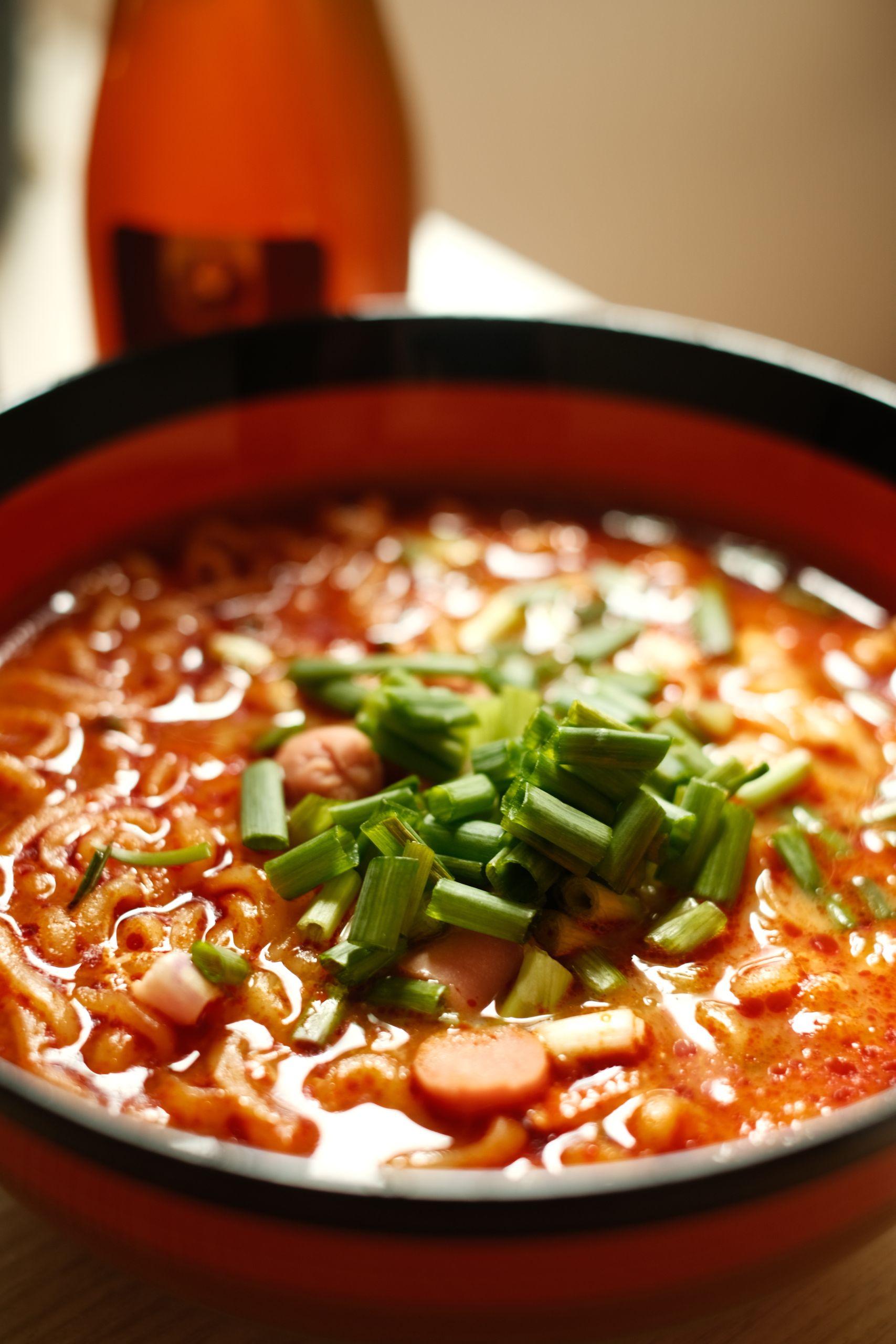
This post contains affiliate links. If you buy through them, I may earn a small commission at no extra cost to you.
Ask a Korean friend why their homemade instant noodles taste better than yours, and the answer is usually one word: matdori (맛돌이). It is Korean internet slang for the “kick” — the ingredient or technique you add to a plain pack of ramyeon to make it insanely good (“존맛탱,” absurdly delicious). It is the logic behind jjapaguri, the mixed-noodle dish from the Oscar-winning film Parasite, and behind the creamy rosé ramyeon videos flooding TikTok and YouTube.
Below are 10 Korean ramyeon hacks with exact bases, kicks, and ratios — all doable tonight with packs you can order on Amazon. (New to Korean instant noodles? Start with our guide to the best Korean ramyeon on Amazon first.)
What Is Matdori? Korea’s Ramyeon Mod Culture, Explained
In Korea, instant ramyeon is not treated as finished food — it is treated as a base ingredient, like pasta or rice. “Matdori” names the upgrade itself: cheese in soup ramyeon, milk in spicy stir noodles, rice cakes dropped into the pot, or two packs cooked together into something new. The culture exploded with YouTube and TikTok mod videos, and it has one famous grandfather: jjapaguri, which Koreans have mixed since the 1980s and the world learned from Parasite in 2019.
The good news for overseas cooks: every hack below needs only instant packs plus ordinary grocery items. No special equipment, no hard-to-find ingredients.
The Hack Pantry: What to Have on Hand
Stock these and 90% of Korean ramyeon mods become possible on any given night:
- Base packs: Shin Ramyun → Buldak Carbonara → Chapagetti → Yeol Ramyeon →
- Cream & cheese: whole milk or heavy cream, 1–2 slices of American cheese (the meltier, the better)
- The Korean kick trio: gochujang → gochugaru → sesame oil + scallions
- Texture upgrades: rice cakes (tteok) → pouch kimchi → eggs, sliced pork or spam
The 10 Hacks
1. Jjapaguri — Parasite‘s Ram-Don (the Original Matdori)
Base: 1 Chapagetti + 1 Neoguri (or Shin Ramyun). Kick: the two seasoning packets, combined.
Cook both packs together for 4 minutes, drain almost all the water, then toss the noodles with the full jjajang powder and just one spoonful of the spicy soup powder. The jjajang gives gloss and sweetness; the spicy powder gives the “kick.” Top with a fried egg — or, in full Parasite style, seared steak.
2. Rosé Ramyeon — the Creamy TikTok Standard
Base: Buldak Carbonara (or Shin Ramyun). Kick: 100 ml whole milk or 60 ml cream + 1 cheese slice.
Cook the noodles in half the usual water. When 1 minute remains, pour in the milk (or cream), add the sauce packet and the cheese slice, and stir until the liquid tightens into a glossy pink-orange sauce. The dairy caps the heat and turns a spicy stir noodle into something pasta-like. This is the single most-copied Korean noodle hack of the last two years.
3. Yeol Ramyeon Egg-Drop Mod (열라면 변형)
Base: Yeol Ramyeon. Kick: 1 egg, sliced scallion, a few drops of sesame oil.
Boil the noodles 3 minutes, then pour in a beaten egg in a thin spiral and do not stir for 20 seconds — it sets into silky ribbons. Finish with scallion and sesame oil. Yeol’s sharp pepper heat plus egg-creaminess is the mod format Korean hack videos return to again and again.
4. Cheese-Melt Soup Ramyeon
Base: Shin Ramyun or Yeol Ramyeon. Kick: 1–2 slices of American cheese, off the heat.
Cook the soup ramyeon as directed, turn the stove off, then lay the cheese slice on top and cover for 30 seconds. Stirring it in makes the broth fondue-thick and tames the spice — the classic Korean “sick day” bowl and the easiest first hack for cheese lovers.
5. Kimchi Ramyeon — the Sour-Spicy Upgrade
Base: Shin Ramyun or Jin Mild. Kick: 2–3 tablespoons of aged kimchi + 1 teaspoon of its brine.
Add chopped kimchi and its brine to the pot at the start so it cooks into the broth, then finish with a slice of pork or spam if you have it. The fermented sourness does what powder seasoning can’t: it makes instant broth taste long-simmered. (Kimchi buying guide: best store-bought kimchi on Amazon.)
6. Tteok-Ramyeon — Rice Cakes in the Pot
Base: any soup ramyeon. Kick: 4–6 rice cakes (tteok), added 2 minutes before the noodles.
Drop frozen or refrigerated rice cakes into the boiling broth first, let them soften, then add the noodle block. The starch slightly thickens the soup and the chew-on-chew texture is deeply Korean — this is essentially tteokbokki and ramyeon in one bowl.
7. Bibim Men Cucumber Mod — Summer Cold Noodles
Base: Paldo Bibim Men. Kick: cucumber matchsticks, 1 teaspoon vinegar, ice in the rinse water.
Boil the noodles, then rinse under cold water with ice until fully chilled and chewy. Toss with the sauce packet, vinegar, and cucumber. The vinegar sharpens the gochujang sauce and the ice-rinse is the difference between “cold noodles” and “Korean cold noodles.”
8. Chapagetti Cheese Mod — Jjajang Fondue
Base: Chapagetti. Kick: 1 cheese slice tossed in off the heat.
Drain the Chapagetti as directed, mix in the jjajang powder, then fold in a cheese slice while the noodles are still hot. The black-bean sauce turns glossy, nutty, and almost alfredo-like — a favorite kid-mod in Korean homes and a great gateway hack for jjajang newcomers.
9. Scallion-Oil (Pa-Gireum) Finish
Base: any stir-type ramyeon. Kick: 1 tablespoon oil + 2 scallions, fried 2 minutes.
Warm oil with chopped scallion in the empty pot until fragrant, remove, cook the noodles in the same pot, then finish with the scallion oil on top. This one technique adds a restaurant-level aroma layer to any pack — the cheapest “kick” on this list.
10. Leftover-Sauce Fried Rice (the After-Hack)
Base: leftover Buldak or jjapaguri sauce. Kick: 1 cup cooked rice + sesame oil + gim (seaweed).
Koreans never waste hack sauce: after eating the noodles, drop cooked rice into the remaining sauce, press and fry for 2 minutes, finish with sesame oil and crumbled seaweed. One pack, two meals — the true final boss of matdori culture.
Matdori Rules: Ratios That Make Hacks Work
- Less water, more sauce: for any stir or rosé hack, use 50–60% of the package water. Watery hack sauce is the #1 beginner mistake.
- Dairy last, heat off: milk, cream, and cheese go in at the end; boiling dairy hard separates it.
- One sour, one cream, one crunch: balanced hacks pair a sour (kimchi brine, vinegar), a cream (cheese, egg, milk), and a crunch (scallion, cucumber, sesame).
- Seasoning packets are dials, not switches: use half to three-quarters first, taste, then add. Packets are calibrated for full water volume.
- Rest 1 minute: stir-type hacks keep thickening off the heat — wait before judging the sauce.
FAQ
What does “matdori” mean exactly?
Korean slang for the “kick” ingredient or mod that makes a dish insanely good — from mat (taste) + a playful suffix. Online it names the whole ramyeon-upgrade culture.
Is jjapaguri really from Parasite?
The dish predates the film by decades, but Parasite (2019, Best Picture) made it global under the subtitle name “ram-don.” The steak topping in the movie is the luxury twist.
Which pack should a beginner hack first?
Buldak Carbonara for rosé (forgiving and creamy) or Shin Ramyun for cheese-melt soup. Both are mild enough to taste your adjustments.
Can these hacks be vegetarian?
Most yes: use Jin Mild or Bibim Men with kimchi (check for fish sauce/anchovy in the pouch), cheese, egg, and vegetables. Always check the seasoning packet ingredients for beef or anchovy extract.
Keep Exploring
Every hack above starts with a good pack — see our ranked guide to the best Korean ramyeon on Amazon in 2026. Then level up your pantry with the Korean ingredient substitutes guide or cook the chewy original: tteokbokki.
🛒 Make Tteokbokki Tonight
- Instant tteokbokki kit — street-food flavor in minutes → View on Amazon
- Tteokbokki rice cakes — chewy cylinders for homemade tteokbokki → View on Amazon
This post contains affiliate links. As an Amazon Associate, I earn from qualifying purchases.
