
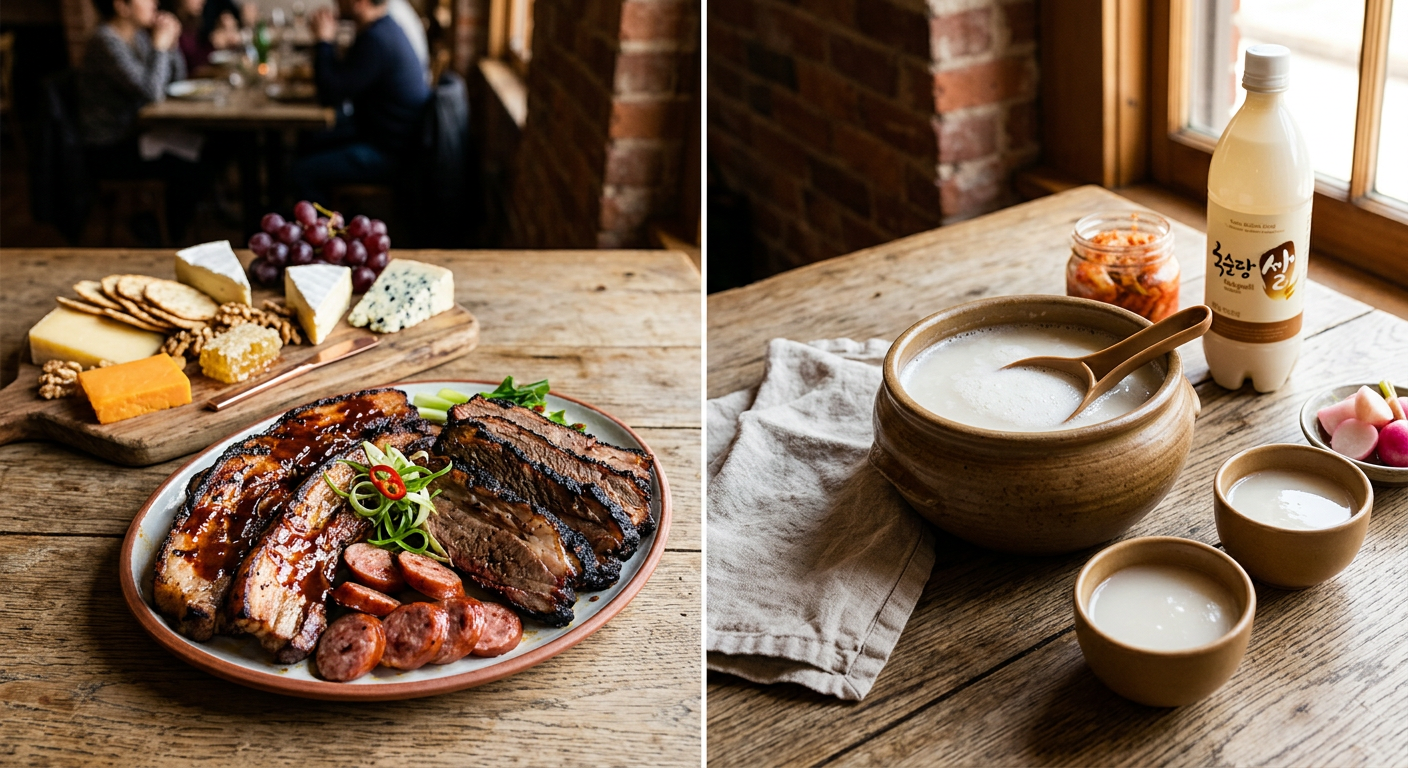
The first time I put makgeolli on a Western-style cheese board, it was not part of a serious pairing plan. I had a bottle open, a piece of cheddar in the refrigerator, and no pajeon in sight. The combination worked better than I expected: the drink’s acidity and gentle fizz lifted the cheese, while the rice softened its salty edge.
Since moving from Seoul to Washington, I have become less interested in rules that say Korean alcohol belongs only with Korean food. Korean traditional liquor with Western food can make complete sense when you match structure—sweetness, acidity, carbonation, body, aroma, and alcohol strength—rather than nationality.
This guide pairs makgeolli, yakju, distilled soju, and aromatic heritage styles with cheese, American barbecue, pizza, burgers, roast meat, seafood, and dessert. If the category is new to you, read my Korean traditional liquor first-bottle guide first. For broader background and Korean drinking culture, see my Korean alcohol guide.
Affiliate disclosure: As an Amazon Associate I earn from qualifying purchases. This post contains affiliate search links for serving pieces; if you buy through them, I may earn a small commission at no extra cost to you.
Quick answer: Pair dry makgeolli with rich or fried food, clear yakju with roast chicken and seafood, high-proof distilled soju with smoky barbecue, and sweeter aromatic liquor with salty cheese or dessert. Start with one contrast and one similarity: acidity against fat, or pear and spice beside roast pork.
Korean Traditional Liquor with Western Food: Quick Pairing Chart
| Western food | My first Korean sool choice | Why it works |
|---|---|---|
| Brie or Camembert | Dry or lightly sparkling makgeolli | Acidity and bubbles refresh the creamy texture. |
| Aged cheddar | Dry makgeolli or 20–25% distilled soju | Grain flavor meets nuttiness; alcohol handles salt and fat. |
| Blue cheese | Sweet Hansan Sogokju or aromatic Gamhongno | Sweetness balances salt and intensity. |
| Smoked brisket | 25–40% distilled soju | A clean, strong spirit cuts smoke and rendered fat. |
| Pork ribs | Distilled soju or dry makgeolli | Choose by sauce: spirit for sweet smoke, makgeolli for chilli. |
| Roast chicken | Dry yakju or cheongju | Gentle grain and fruit-like aromas do not overwhelm the meat. |
| Pepperoni pizza | Dry, lively makgeolli | Acidity and carbonation reset the palate after cheese and cured meat. |
| Mushroom pasta | Earthy yakju | Fermented grain aroma can echo mushrooms and browned butter. |
| Cheesecake | Bokbunja or omija fruit wine | Berry acidity and fruit contrast with dense creaminess. |
| Dark chocolate | Gamhongno or Leegangju | Spice and botanicals extend cocoa aromas. |
These are starting points, not promises. “Makgeolli” can mean a thin sweet 6% bottle or a dry, dense 15% craft takju. Read the actual label before planning the food.
My Five Pairing Rules
1. Use acidity and carbonation against fat
Creamy cheese, fried chicken, and buttery pasta can make the palate feel coated. A dry makgeolli with acidity or natural carbonation acts more like cider or farmhouse ale than still rice wine. It does not erase the richness; it gives the next bite a clean beginning.
2. Use sweetness against salt, chilli, or blue cheese
A noticeably sweet yakju or fruit wine can feel tiring beside a sweet dish, but useful beside salty ham, spicy glaze, or blue cheese. The key is proportion. I pour a smaller amount of the sweeter drink and keep the food savory.
3. Match alcohol strength to smoke and char
A delicate clear rice wine can disappear beside blackened brisket bark. A 25–40% distilled soju has enough intensity for smoke, pepper, and rendered beef fat. I serve a small neat pour and keep water on the table.
4. Match aroma, not just weight
Leegangju’s pear and ginger profile makes me think of roast pork before I think of steak. Gamhongno’s cinnamon, citrus peel, clove, ginger, and other botanicals suggest aged cheese or dark chocolate. An aroma bridge can make an unusual pairing feel obvious.
5. Let one item be simple
If the bottle is rare and aromatic, I do not cover the table with five sauces. If the barbecue has an intense rub and glaze, I choose a cleaner drink. Pairing becomes confusing when both sides are trying to be the main character.
The Best Korean Liquor Pairings for Cheese
Brie, Camembert, and triple-cream cheese
My first choice is a dry or gently sparkling makgeolli. The soft rice texture feels comfortable beside the cheese, while acidity keeps the combination from becoming heavy. I avoid a very sweet banana- or peach-flavored bottle here because it can turn the cheese board into dessert too early.
A delicate yakju also works when the cheese is young and mild. Serve it slightly chilled in a wine glass so you can notice its aroma as it warms.
Fresh goat cheese and feta
Fresh goat cheese has tang; feta adds salt. I like a clean, dry yakju with both. The pairing is closer to white wine than to a shot of soju. Add cucumber, pear, or a plain cracker rather than a sugary jam.
With feta in a salad, an omija-based wine can also be interesting if it has enough acidity and is not syrupy. Omija is known for a mix of sweet, sour, bitter, salty, and pungent impressions, so I keep the rest of the salad simple.
Aged cheddar, Gouda, and Comté
This is where grain character becomes useful. A dry makgeolli can echo the cheese’s toasted, nutty side, while a 20–25% distilled soju gives a cleaner contrast. With aged Gouda and its caramel-like notes, I prefer a rounder grain spirit over a neutral green-bottle soju.
If the soju is 40% or higher, pour less than you would pour wine. A pairing should not become a strength test.
Blue cheese
Blue cheese needs sweetness or strong aroma. Hansan Sogokju is an appealing match because VISITKOREA describes it as a sweet 18% clear rice liquor with pronounced aroma. The cheese supplies salt and savory depth; the drink supplies grain sweetness.
Gamhongno is the more dramatic option. Its red color and layered spices—cinnamon, tangerine peel, clove, ginger, licorice, and others—can stand beside a small piece of blue cheese. I would serve this as the final pairing, not the first.
Washed-rind cheese
Aromatic washed-rind cheese can overpower light makgeolli. Try Leegangju, whose pear, ginger, turmeric, cinnamon, and honey profile creates both contrast and an aromatic bridge. Keep the serving small and add plain bread.
Korean Traditional Liquor with American Barbecue
Smoked brisket
Brisket asks for a spirit with structure. I reach for distilled soju in the 25–40% range, especially a grain-forward style such as Andong Soju or another rice, wheat, or barley distillate. The spirit cuts through fat and smoke without adding another layer of sugar.
If the brisket is very peppery, a splash of cool water in the soju can open the aroma and reduce the burn. I do not shoot it. I sip it like a young whisky or shochu.
Pork ribs
The sauce decides the bottle. For sticky, sweet tomato-based ribs, I want dry distilled soju so the table does not become sweeter with every bite. For Korean-inspired chilli ribs or vinegar-forward ribs, a tart dry makgeolli can be refreshing.
Leegangju is another good direction when the pork has apple, pear, ginger, or warm spice in the glaze. It follows the food’s aroma without copying the sauce exactly.
Pulled pork
Pulled pork with a sharp vinegar sauce is friendlier to makgeolli than heavy brisket is. Choose a dry bottle with enough acidity and chill it well. With a sweeter Kansas City-style sauce, move toward distilled soju or keep the makgeolli very dry.
Sausages and grilled pork
Sausage, mustard, and makgeolli may sound like two different countries, but the structure is familiar: grain, fermentation, fat, acidity, and carbonation. I like a lively standard-strength makgeolli here, especially with a coarse pork sausage rather than a very delicate one.
Grilled chicken
Grilled chicken gives yakju room to speak. A clear, moderately dry rice wine complements browned skin and herbs without fighting them. If the chicken has a heavy barbecue glaze, switch to a stronger distilled soju.
Pizza, Burgers, Fried Chicken, and Casual Food
Pepperoni pizza
Dry makgeolli is my first pick. Tomato acidity, melted cheese, cured meat, and chilli flakes all benefit from a cool drink with gentle fizz. A sweeter commercial makgeolli can still work if the pizza is spicy, but I would not add a sweet dipping sauce.
Mushroom pizza
Try yakju. The fermented grain aroma can connect with mushrooms, toasted crust, and browned cheese. A full-bodied craft makgeolli also works, but a delicate topping is easier to taste with a clear drink.
Cheeseburgers
A juicy burger can handle a 20–25% distilled soju. The spirit works especially well with grilled onions and a savory rather than sugary sauce. For a smash burger with crisp edges, I sometimes prefer dry makgeolli because it feels more like an ale pairing.
Fried chicken
Beer is not the only answer. Makgeolli’s acidity and carbonation refresh the palate after fried crust, while rice sweetness softens salt and chilli. With plain or herb-seasoned chicken, choose dry makgeolli. With very spicy chicken, a slightly sweeter bottle may be more comfortable.
Roast Meat, Seafood, and Pasta
Roast pork with apples or herbs
Leegangju is the bottle I imagine first because pear and ginger naturally belong near pork. Its cinnamon and turmeric notes can also connect with a fall roast. I keep the sauce less sweet so the drink still has contrast.
Roast turkey or chicken
A clean yakju can do the job of a light white wine. It is especially good with mushrooms, chestnuts, or a rice-based stuffing. For cranberry-heavy plates, try a tart omija wine instead.
Grilled salmon
Choose a dry yakju or cheongju. It has enough body for oily fish but is less likely than a smoky high-proof spirit to cover the salmon. A small amount of citrus or herbs on the fish creates an easy bridge.
Cream pasta
Dry, acidic makgeolli is more successful than a sweet one. The slight graininess can feel like part of the sauce, while the acidity keeps cream and Parmesan moving. If the bottle is thick and high in alcohol, pour it in a wine glass rather than a bowl.
Tomato pasta
Tomato sauce can make a low-acid sweet drink taste flat. I prefer a tart fruit sool, a dry sparkling makgeolli, or a clean distilled soju with spicy sausage pasta. Taste the sauce before opening the rare bottle.
Dessert Pairings
Cheesecake
Bokbunja wine, made from Korean black raspberries, is the easiest bridge. Berry fruit and acidity brighten dense cream cheese. I choose a cheesecake without a second heavy fruit topping so the drink has a clear role.
Apple or pear tart
Leegangju repeats pear and warm spice while its alcohol keeps the pairing from feeling like juice. A lightly sweet yakju can also work if the tart is not heavily caramelized.
Dark chocolate
Gamhongno’s spice and herbal depth can extend cocoa, clove, and dried-fruit notes. Use a small piece of dark chocolate and a small pour. Milk chocolate is more likely to make the combination cloying.
Plain butter cake or shortbread
Hansan Sogokju can supply the sweetness the cake lacks. This is one of the few times I enjoy similarity more than contrast: rice sweetness, butter, and a restrained portion.
A Korean Sool Cheese Board I Would Actually Serve
- Cheese 1: young goat cheese with dry yakju
- Cheese 2: aged cheddar with dry makgeolli
- Cheese 3: blue cheese with Hansan Sogokju
- Neutral items: plain crackers, sliced Korean pear, cucumber, and unsalted nuts
- Optional finish: one square of dark chocolate with Gamhongno or Leegangju
Three cheeses and three small pours are enough. I set out water, label every bottle with its ABV, and pour the strongest drink last. If I am serving people who are new to sool, I include one familiar wine or nonalcoholic sparkling drink so no one feels pressured.
A Simple Barbecue Flight
| Course | Food | Sool |
|---|---|---|
| 1 | Grilled chicken or sausage | Dry makgeolli |
| 2 | Pulled pork with vinegar sauce | Fuller makgeolli or dry yakju |
| 3 | Smoked brisket | 25–40% distilled soju |
| 4 | Blue cheese or dark chocolate | Sweet yakju, Leegangju, or Gamhongno |
The pours should become smaller as ABV rises. A tasting flight is not four full drinks.
Serving Temperature and Glasses
- Makgeolli: start chilled. Keep a live bottle upright and follow its opening instructions.
- Yakju and cheongju: begin slightly chilled in a white-wine glass; let the glass warm naturally.
- Distilled soju: try a small neat pour first, then add water or ice if it improves the food pairing.
- Sweet and aromatic sool: pour less and serve later in the meal.
- Fruit wine: cool, not frozen; very low temperature can hide aroma.
Opaque bowls are enjoyable for a traditional makgeolli table, but clear glass is better when I want to compare color, sediment, and aroma.
Optional Serving Pieces on Amazon US
- Korean soju and somaek glass set on Amazon US →
- Compare makgeolli bowl sets on Amazon US →
- Compare small rice-wine glasses on Amazon US →
For the bottles themselves, use a licensed retailer. My guide to buying Korean traditional liquor in the USA explains current online and local options.
Common Pairing Mistakes
- Treating all makgeolli as one flavor. Check sweetness, ABV, carbonation, and pasteurization.
- Serving the strongest spirit first. High-proof soju can erase delicate yakju and cheese.
- Pairing sweet sauce with sweet liquor automatically. The table often needs dryness or acidity instead.
- Using too many flavored crackers and jams. They make it hard to understand the bottle.
- Calling green-bottle soju traditional distilled soju. They can both be enjoyable, but they are produced differently.
- Ignoring water and portion size. Sool ranges from beer strength to full-strength spirit.
Frequently Asked Questions
What cheese goes best with makgeolli?
Brie, Camembert, aged cheddar, and mild washed-rind cheese can all work. Choose dry, acidic makgeolli for creamy cheese and a fuller rice-rich bottle for aged cheddar.
What Korean liquor goes with American barbecue?
Distilled soju in the 25–40% range is my first choice for smoked brisket and rich ribs. Dry makgeolli works well with pulled pork, sausage, fried sides, and spicy barbecue.
Can I pair soju with pizza?
Yes. A clean distilled soju works with meat-heavy pizza, while dry makgeolli is often better with pepperoni or fried toppings because it adds acidity and carbonation.
What is the best Korean liquor for a wine drinker?
Start with dry yakju or cheongju. These clear fermented grain drinks are closer to a wine-like serving experience than cloudy makgeolli or high-proof distilled soju.
What Korean liquor works with dessert?
Bokbunja with cheesecake, Leegangju with pear or apple tart, Hansan Sogokju with plain butter cake, and Gamhongno with dark chocolate are useful starting points.
Is traditional Korean liquor healthy?
No alcoholic pairing should be treated as a health practice. The World Health Organization states that no amount of alcohol is risk-free. Keep pours small, never drink before driving, and offer a nonalcoholic option.
Alcohol shipping rules differ state by state, so check which states and countries will actually accept the order before you get attached to a bottle.
