
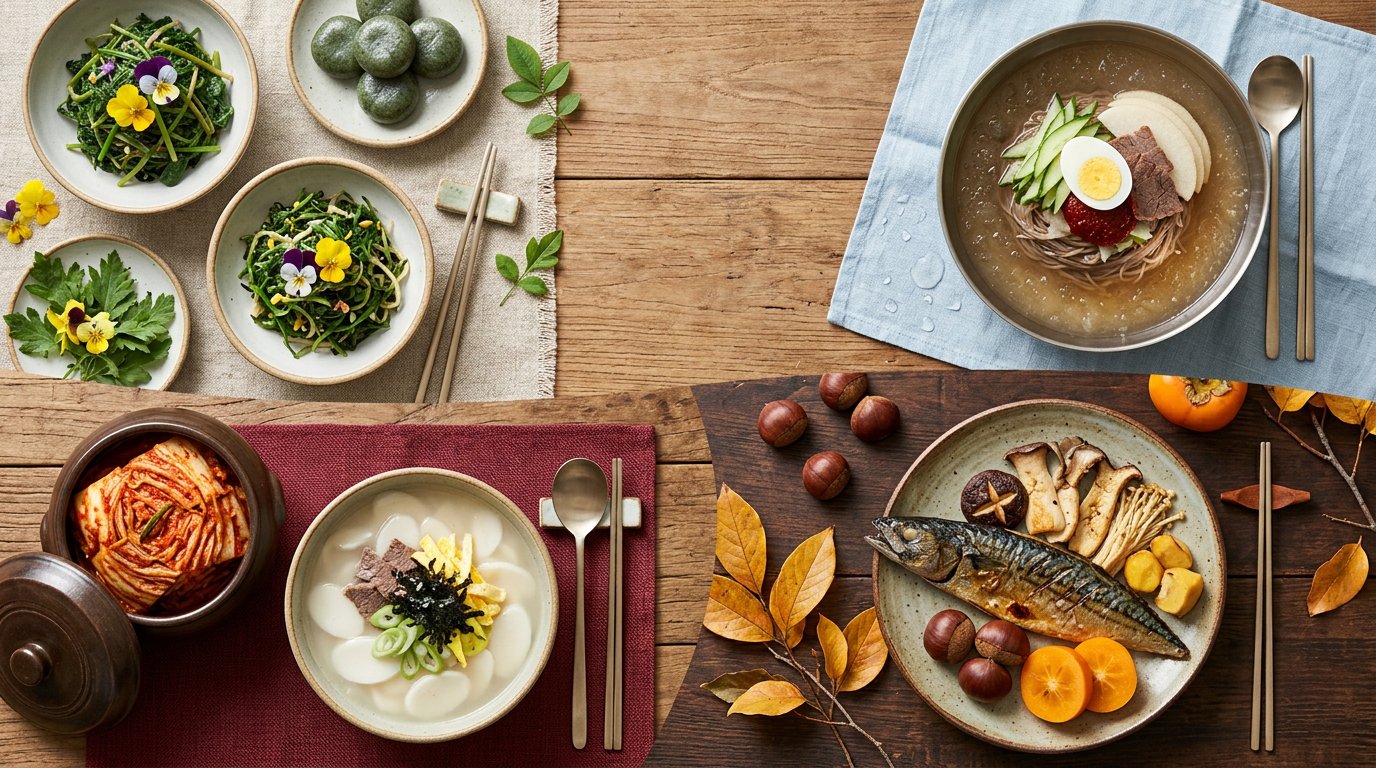
Korean seasonal foods change with the weather, harvest, holidays, and the way Koreans balance hot and cold. Spring brings tender mountain greens, summer calls for icy noodles and restorative soups, autumn celebrates seafood and the harvest, and winter is the season for kimjang and warming street food.
This seasonal Korean food calendar explains what Koreans eat in each season, the ingredients you need, where to buy them outside Korea, and why each dish belongs to that time of year.
As an Amazon Associate I earn from qualifying purchases. This page contains affiliate links, which may earn me a small commission at no extra cost to you.
Korean Seasonal Foods Calendar at a Glance
| Season | Typical Months | Foods to Know | Seasonal Theme |
|---|---|---|---|
| 🌱 Spring | March–May | Spring namul, mugwort dishes, bomdong kimchi, jukkumi, hwajeon | Fresh greens, new growth, and slightly bitter flavors |
| ☀️ Summer | June–August | Naengmyeon, samgyetang, kongguksu, patbingsu, cucumber banchan | Cooling foods plus restorative dishes for hot days |
| 🍂 Autumn | September–November | Jeoneo, songpyeon, mushrooms, chestnuts, persimmons | Seafood, grains, fruit, and the harvest |
| ❄️ Winter | December–February | Kimjang kimchi, tteokguk, mandu-guk, hotteok, red bean porridge | Fermentation, preserved food, holidays, and warmth |
Korea’s seasons do not begin on fixed culinary dates. Weather and harvest timing vary by region and year, so treat the months as a practical guide rather than a strict rule.
🌱 Korean Seasonal Foods for Spring
Spring Korean food often features bom-namul—young greens gathered when their leaves are still tender. Their fresh, grassy, and sometimes bitter flavors are commonly seasoned with doenjang, gochujang, garlic, vinegar, or sesame oil.
| Seasonal Food | Ingredients You Need | Where to Buy | Why Koreans Eat It in Spring |
|---|---|---|---|
| Bom-namul muchim Seasoned spring greens | Young greens such as minari, naengi, or chwinamul; doenjang or gochujang; garlic; sesame oil | Fresh greens: H Mart or local Asian market Doenjang on Amazon → | Tender spring greens symbolize the return of fresh produce after winter. The lightly bitter taste is part of their appeal. |
| Ssuk-guk or ssuk-tteok Mugwort soup or rice cake | Korean mugwort, rice flour or soup broth, garlic, soup soy sauce | Frozen mugwort: Korean grocery stores Mugwort powder on Amazon → | Young mugwort appears in spring and has a distinctive herbal aroma associated with traditional rice cakes and soups. |
| Bomdong geotjeori Fresh spring cabbage kimchi | Bomdong or tender napa cabbage, gochugaru, fish sauce, garlic, scallions | Use tender napa cabbage if bomdong is unavailable Gochugaru on Amazon → | Unlike long-fermented winter kimchi, geotjeori is eaten fresh. Spring cabbage is crisp, sweet, and tender. |
| Jukkumi bokkeum Spicy stir-fried webfoot octopus | Jukkumi or small octopus, gochujang, gochugaru, garlic, vegetables | Frozen seafood: Korean or large Asian markets Gochujang on Amazon → | Jukkumi is strongly associated with its spring season, when restaurants promote spicy octopus dishes. |
| Hwajeon Flower rice cakes | Glutinous rice flour, edible flowers, water, a little sugar or honey | Sweet rice flour on Amazon → Use only flowers sold as edible and pesticide-free. | Small pan-fried rice cakes decorated with blossoms visually celebrate spring. Azalea is traditional, but food safety matters more than appearance. |
Easy spring substitute: If Korean wild greens are unavailable, try watercress, young spinach, dandelion greens, or arugula. The flavor will differ, but the idea of lightly seasoned tender greens remains.
☀️ Korean Seasonal Foods for Summer
Korean summer eating has an interesting contrast. Some dishes cool the body with ice and chilled broth, while others follow iyeol chiyeol—“fight heat with heat”—by serving a steaming restorative soup on the hottest days.
| Seasonal Food | Ingredients You Need | Where to Buy | Why Koreans Eat It in Summer |
|---|---|---|---|
| Naengmyeon Cold buckwheat noodles | Naengmyeon noodles, chilled broth or spicy sauce, cucumber, egg, Korean pear | Naengmyeon noodles on Amazon → Frozen kits: Korean markets | The icy broth of mul-naengmyeon and the spicy sauce of bibim-naengmyeon are especially refreshing in humid weather. |
| Samgyetang Ginseng chicken soup | Small whole chicken, glutinous rice, garlic, jujubes, ginseng | Samgyetang ingredient kits on Amazon → | It is traditionally eaten on the three hottest sambok days as a nourishing meal, even though the soup arrives bubbling hot. |
| Kongguksu Noodles in cold soy milk | Wheat noodles, soybeans or unsweetened soy milk, cucumber, sesame seeds | Soybeans and noodles: supermarkets Korean thin noodles on Amazon → | The cold, creamy soybean broth is filling without being heavy. Diners season it with salt—or sometimes sugar, depending on region and family. |
| Patbingsu Shaved ice with red beans | Fine shaved ice, sweetened red beans, condensed milk, fruit, injeolmi | Sweet red beans on Amazon → Ice shavers: online or kitchen stores | Bingsu cafés become a summer destination. Modern versions add mango, green tea, cheesecake, or other toppings. |
| Oi-muchim or oi-naengguk Spicy cucumber salad or cold cucumber soup | Cucumber, vinegar, gochugaru, garlic, sesame; cold water for soup | Fresh cucumber: any supermarket Gochugaru on Amazon → | Cucumber is crisp, watery, quick to season, and ideal when turning on the stove feels like too much work. |
🍂 Korean Seasonal Foods for Autumn
Autumn Korean seasonal foods reflect both land and sea. Chuseok highlights newly harvested rice and fruit, while coastal areas celebrate oily fish and seafood. Mushrooms, chestnuts, jujubes, sweet potatoes, and persimmons also appear widely.
| Seasonal Food | Ingredients You Need | Where to Buy | Why Koreans Eat It in Autumn |
|---|---|---|---|
| Grilled jeoneo Gizzard shad | Whole gizzard shad, coarse salt, optional ssam vegetables | Fresh jeoneo is difficult to source abroad; ask a Korean seafood market Use fresh sardines or small mackerel as an accessible alternative. | Jeoneo becomes richer and oilier in autumn. Its strong grilling aroma is so famous that it appears in a Korean saying about bringing people home. |
| Songpyeon Half-moon rice cakes | Short-grain rice flour, sesame or bean filling, sugar, pine needles if available | Rice flour on Amazon → Ready-made songpyeon: Korean bakeries near Chuseok | Families eat songpyeon during Chuseok, Korea’s major autumn harvest holiday. |
| Beoseot jeongol Mushroom hot pot | Mixed mushrooms, tofu, vegetables, broth, soy sauce, optional beef | Use shiitake, oyster, enoki, cremini, or local wild mushrooms Korean-style hot pots on Amazon → | Autumn’s mushroom harvest suits a light communal hot pot that emphasizes earthy aroma. |
| Chestnut rice Bam-bap | Short-grain rice, peeled chestnuts, jujubes, optional beans | Fresh or vacuum-packed chestnuts: Asian markets Peeled chestnuts on Amazon → | New rice and chestnuts represent the autumn harvest and create a gently sweet rice dish. |
| Hongsi or gotgam Soft or dried persimmon | Ripe persimmons or Korean dried persimmons | Fresh persimmons: supermarkets in autumn Dried persimmons on Amazon → | Persimmons ripen in autumn. They are eaten soft, dried for winter, or used in desserts and sujeonggwa. |
❄️ Korean Seasonal Foods for Winter
Winter Korean food is shaped by preservation, fermentation, holidays, and street snacks. Kimjang traditionally prepared enough kimchi for the cold months, while Lunar New Year brings rice cake soup and family dumpling-making.
| Seasonal Food | Ingredients You Need | Where to Buy | Why Koreans Eat It in Winter |
|---|---|---|---|
| Kimjang kimchi Large-batch winter kimchi | Napa cabbage, Korean radish, gochugaru, garlic, ginger, fish sauce or vegan seasoning | Fresh produce: H Mart or Asian markets Kimchi ingredients on Amazon → | Late-autumn and early-winter kimjang is a communal tradition for preparing fermented vegetables for winter. |
| Tteokguk Rice cake soup | Oval sliced rice cakes, beef or anchovy broth, egg, gim, scallions | Sliced rice cakes on Amazon → Fresh/frozen tteok: Korean markets | Koreans traditionally eat tteokguk on Lunar New Year. The white rice cakes symbolize a clean beginning. |
| Mandu-guk Dumpling soup | Korean dumplings, broth, egg, scallions; optional sliced rice cakes | Search Korean mandu on Amazon → Frozen selection: Korean supermarkets | Hot broth and family-made dumplings suit winter gatherings and Lunar New Year meals. |
| Hotteok Sweet filled pancakes | Yeast dough, brown sugar, cinnamon, seeds or chopped nuts | Hotteok mix on Amazon → | Hotteok is a classic cold-weather street snack: crisp outside, chewy inside, with a molten sugar filling. |
| Dongji patjuk Red bean porridge | Red beans, rice or small rice balls, salt, optional sugar | Red beans on Amazon → | Red bean porridge is associated with the winter solstice. Its red color was traditionally believed to repel harmful energy. |
Where to Buy Ingredients for Korean Seasonal Foods
- Amazon: Best for shelf-stable items such as gochujang, doenjang, gochugaru, dried noodles, rice flour, dried persimmons, and hotteok mix.
- H Mart and Korean supermarkets: Best for fresh greens, seafood, refrigerated rice cakes, frozen dumplings, Asian pear, Korean radish, and ready-made holiday foods.
- Other Asian markets: Good for napa cabbage, daikon, mushrooms, frozen seafood, tofu, soybeans, and noodles.
- Regular supermarkets: Useful for practical substitutes such as watercress, spinach, cucumber, Bosc pear, sardines, chestnuts, and persimmons.
For online-store comparisons and Korean label tips, read Where to Buy Korean Ingredients Online in the USA. If an exact seasonal ingredient is unavailable, use the Korean Ingredient Substitute Guide.
If price is what decides it for you, I also broke down per-gram price by store.
Korean Seasonal Foods FAQs
What is the most famous Korean summer food?
Naengmyeon is one of the best-known summer dishes because of its chilled noodles and icy broth. Samgyetang is equally important culturally: Koreans eat the hot ginseng chicken soup on the hottest days for nourishment.
What Korean food is eaten in winter?
Winter favorites include kimjang kimchi, tteokguk, mandu-guk, hotteok, fish-cake soup, and red bean porridge. Fermented foods and hot soups become especially prominent.
What do Koreans eat in autumn?
Autumn foods include oily jeoneo, mushrooms, chestnuts, persimmons, newly harvested rice, and songpyeon for Chuseok. It is one of Korea’s richest harvest and food-festival seasons.
Can I make Korean seasonal food without a Korean grocery store?
Yes. Buy Korean pantry seasonings online and use locally available produce or seafood where appropriate. Freshness often matters more than forcing an exact imported substitute, especially for spring greens, mushrooms, and fish.
The Korean Seasonal Food Year
Korean seasonal foods are not just a list of dishes. They connect weather, agriculture, holidays, preservation, and ideas about caring for the body. Start with one accessible dish each season: spring greens, summer naengmyeon, autumn songpyeon, and winter tteokguk. Together they tell the story of a Korean year through food.
Next read: Korean Kitchen Tools · Korean Food Culture · Ingredients & Substitutes
Disclosure: This post contains affiliate links. If you buy through these links, I may earn a small commission at no extra cost to you. As an Amazon Associate I earn from qualifying purchases.
